
Preparing medical records for a fertility clinic visit
Collect history, prior cycle summaries, tests, ultrasound, surgery, medicine and genetic records securely, chronologically and in a decision-ready format.
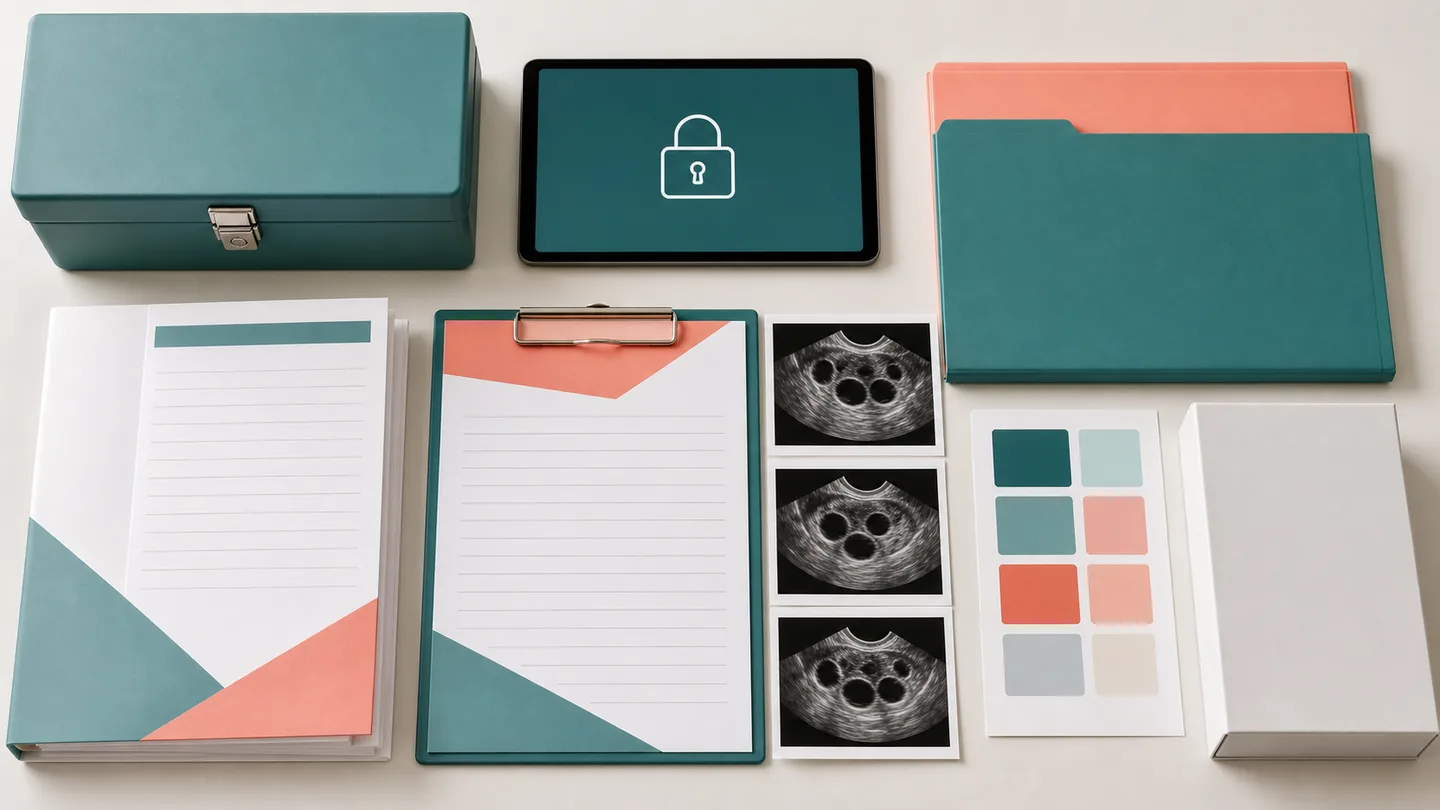
Well-organised medical records for a fertility clinic visit help the clinician understand previous care quickly, reduce avoidable repetition and identify which missing information could genuinely change a decision. A short chronology plus original reports is usually more useful than a large unsorted archive.
Use the clinic’s secure portal and accepted file format. The patient name, date of birth, test date, laboratory, measurement unit and reference range should remain visible; a cropped screenshot of one result can remove important clinical context.
What belongs in the core record set?
Relevant material can include menstrual and pregnancy history, operations, chronic conditions, allergies, current medicines and supplements, semen analysis, AMH and other indicated hormones, ultrasound and tubal assessment. The clinician will decide what is relevant to your case.
After previous IVF, request an official cycle summary covering protocol, medicines and doses, monitoring, eggs collected, maturity, fertilisation method, embryo development, transfer, stored material and outcome. A note that a cycle simply “failed” is not enough to inform the next plan.
Protect dates, translation and privacy
Create a newest-to-oldest index and name each file with its date. For an important report in another language, ask which type of translation the clinic accepts; do not convert laboratory units yourself or replace the original result with an informal interpretation.
Check the confidential route before using open messaging or shared email. A partner’s result is personal information belonging to that person and may require their permission to share. Keep an unchanged copy of every original and record when each file was sent.
Prepare records in a form that can support decisions
Collect laboratory reports with dates, units and reference ranges; ultrasound and HSG images as well as reports; operative notes; embryology records; and previous cycle protocols. Keep a separate list of medicines, doses, allergies, pregnancy history and relevant findings for both partners. Ask in advance which items need certified translation.
Use the clinic’s secure portal and avoid sending identity numbers or other unnecessary data in ordinary email. Tests may need repeating when they are old, incomplete, use an unsuitable method or fall outside an infection-screening validity period. The purpose is not to repeat everything, but to make the current decision from reliable and timely information.
Frequently asked questions
Must every old test be repeated?
Not automatically. Some results are time-sensitive, while others remain useful history. Ask which documents are still valid and which repeat would meaningfully affect the current decision.
Will every test from my previous clinic be repeated?
No. The need depends on date, method, completeness, infection-screening validity and the planned procedure. Ask which decision each repeat test is expected to influence.
Before an Övlad Payı consultation, request our records checklist so the team can help you collect only decision-relevant information through a secure route.
Trusted sources
This article is for patient education and does not replace individual medical advice.