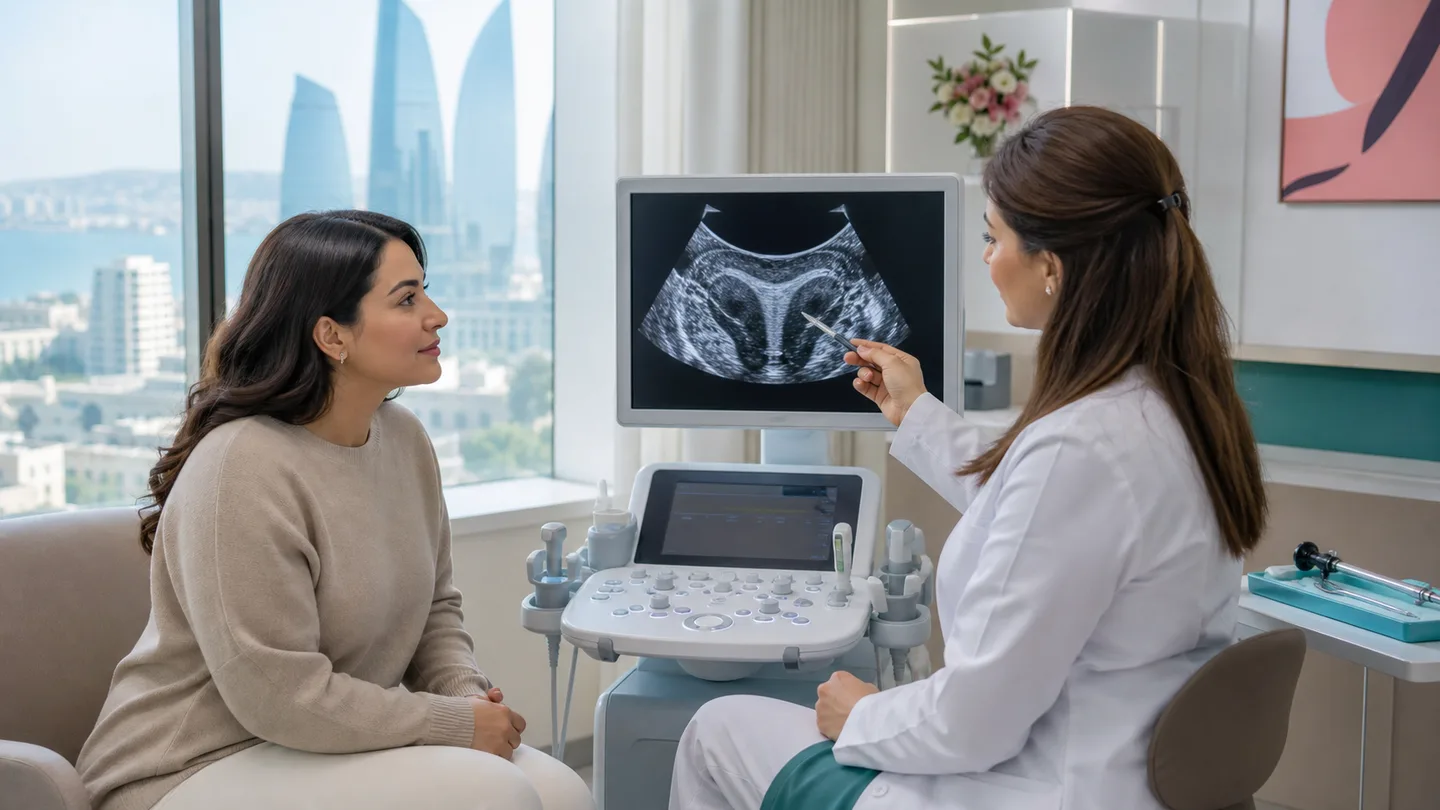
What is the first appointment for?
A consultation does not commit you to treatment or IVF. It is an opportunity to explore factors that may affect conception, avoid unnecessary repeat tests and discuss your options. Where relevant, both partners should be assessed in parallel: fertility difficulties are not necessarily caused by a female factor.
When should you seek advice?
ASRM recommends assessment after 12 months of regular unprotected intercourse without pregnancy when the woman is under 35, or after 6 months at age 35 or above. Over 40, a more immediate assessment may be appropriate.
Do not wait for these thresholds if periods are irregular or absent, there is known or suspected endometriosis or tubal disease, sperm results are abnormal, or treatment that may affect fertility is planned. You can also seek an earlier consultation if you have concerns.
Preparing for your visit
- Note the first day of your last period, usual cycle length and recent changes.
- Bring details of previous pregnancies, surgery, infections and fertility treatment.
- List medicines, vitamins and supplements, allergies and long-term conditions.
- Bring existing blood tests, scan reports and any semen analysis. You do not need to order a new panel of tests yourself.
- Write down your questions, practical constraints and priorities for treatment.
Which investigations might be useful?
Your history guides the choice of ovulation assessment, ultrasound, selected hormone tests and semen analysis. Checking whether the fallopian tubes are open may require a separate investigation; a routine pelvic scan alone cannot establish this. Not everyone needs every test, and some investigations are timed to your menstrual cycle.
AMH and antral follicle count can help estimate how the ovaries may respond to treatment. They do not, on their own, measure egg quality or reliably predict your individual chance of conceiving naturally.
Making a plan from the results
Options may include further observation, treatment of an identified cause, follicle monitoring or, when appropriate, IVF. Sometimes routine investigations do not identify a clear cause. “Unexplained” does not mean the difficulty is not real.
Will one appointment give me every answer?
Not always. Cycle-timed tests and a partner's assessment may require another visit. Before leaving, establish which results are outstanding, who will explain them and when you should next contact the team.
What should I ask?
Useful questions include: “How will this test change the decision?”, “What are the alternatives?” and “What are the likely timetable and itemised costs?” If cancer treatment is planned, discuss fertility preservation with the relevant teams before treatment begins.
Sources and using this information
Sources checked on 22 October 2026. The linked sources are in English. This page provides general information, not individual medical advice. Confirm treatment suitability, availability, timing and costs with the clinic.