
Uterine cavity testing: ultrasound, SIS and hysteroscopy
Understand how transvaginal ultrasound, saline infusion sonography and hysteroscopy differ, what each can show and when they may be used in fertility assessment.
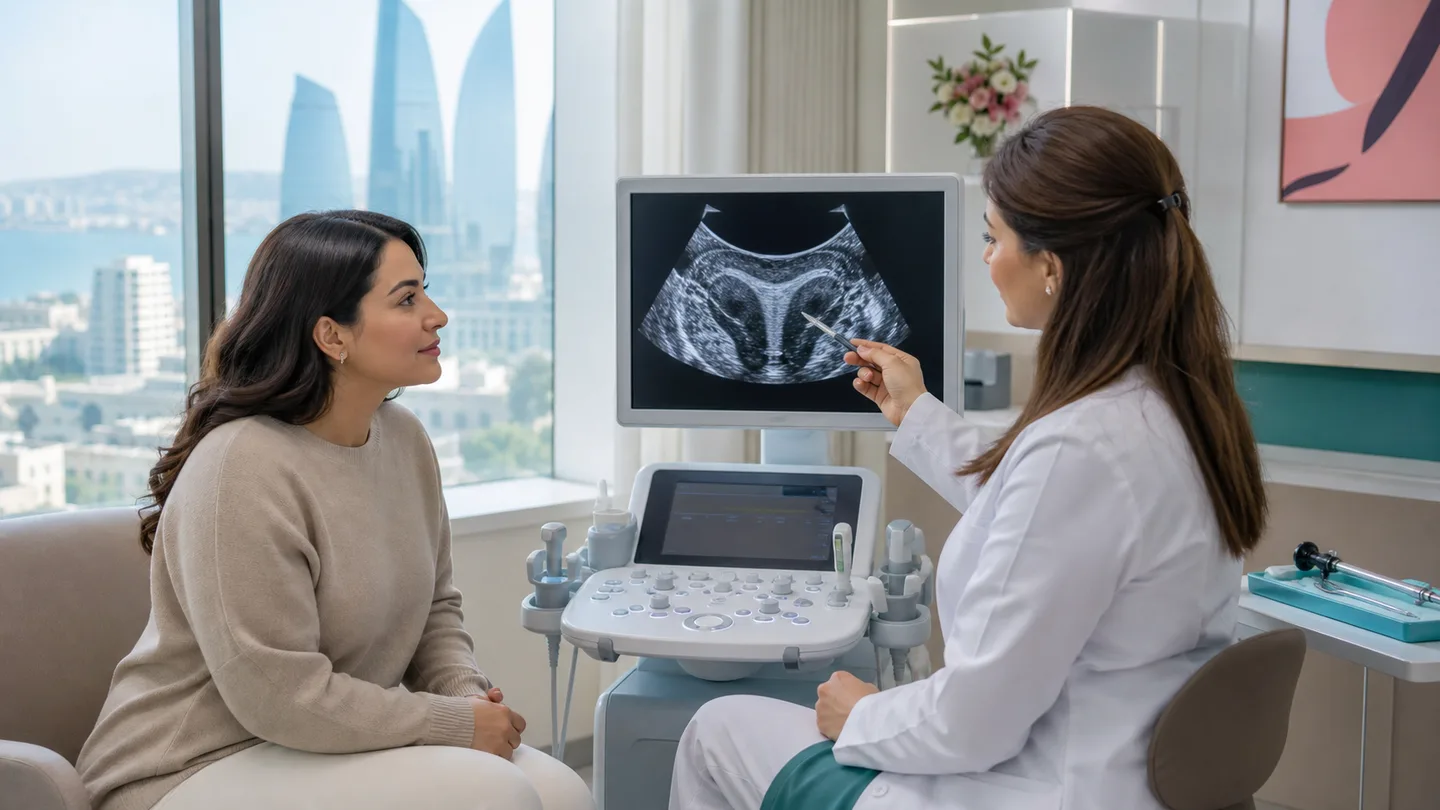
Uterine cavity testing can matter during fertility assessment because the inner space of the uterus is where an embryo implants. Polyps, fibroids that project into the cavity, scar tissue and some congenital differences may affect that space without causing obvious symptoms. Even so, responsible assessment does not mean performing every available procedure for every patient.
Transvaginal ultrasound, saline infusion sonography and hysteroscopy do not simply duplicate one another. They examine the same region in different ways, with different levels of detail and invasiveness. The appropriate sequence depends on symptoms, previous surgery or pregnancy history, the initial ultrasound and whether a result would change the treatment plan.
Transvaginal ultrasound is usually the first view
A transvaginal ultrasound assesses uterine size and shape, the muscle wall and the thickness and appearance of the endometrium. It can also evaluate the ovaries during the same visit. It uses no ionising radiation and often provides enough information for the initial assessment. Fibroids, some polyps and structural differences may be visible, although small cavity lesions can remain indistinct.
The appearance of the lining varies across the menstrual cycle, so timing may be chosen for the clinical question. If an image is uncertain, a clinician may recommend a more focused study. A normal scan cannot exclude every small cavity abnormality, while a suspected finding does not automatically mean surgery is required.
- Provides a minimally invasive first anatomical assessment.
- Shows the ovaries as well as the uterus.
- May need a follow-up study for small polyps or adhesions.
SIS outlines the cavity more clearly
During saline infusion sonography, often shortened to SIS, a small amount of sterile saline is introduced through a thin catheter while a transvaginal ultrasound is performed. The fluid gently separates the cavity walls. This can make a polyp, submucosal fibroid, adhesion or contour difference easier to distinguish than on a standard scan.
The examination is usually brief and can cause temporary cramping similar to menstrual discomfort. Possible pregnancy and active pelvic infection need to be considered beforehand. SIS creates a detailed image but generally does not take tissue or treat the finding at the same time; its result helps determine whether another step is justified.
When is hysteroscopy considered?
Hysteroscopy passes a slender camera through the cervix for a direct view of the uterine cavity. When a polyp, adhesion or submucosal fibroid is suspected, it can confirm the diagnosis and, in suitable settings, allow treatment during the same procedure. That advantage must be balanced against greater invasiveness, preparation and potential procedural risks.
Hysteroscopy is not a routine first screening test for every fertility patient. HSG is principally designed to assess whether the fallopian tubes are open and gives only limited cavity information; SIS and hysteroscopy are more focused on intracavitary changes. The best test is not automatically the most invasive one, but the least burdensome option that reliably answers the actual clinical question.
- Unexpected bleeding or a repeatedly suspicious ultrasound finding.
- Previous uterine surgery, adhesion risk or possible cavity distortion.
- A need to see a lesion directly and consider treatment.
Frequently asked questions
Does an HSG replace uterine cavity testing?
Not completely. HSG mainly evaluates tubal patency and can outline the cavity, but SIS or hysteroscopy may be more informative for small polyps, adhesions and other intracavitary findings.
Do I need SIS after a normal transvaginal ultrasound?
Not routinely. It may be useful when there is abnormal bleeding, previous uterine surgery, an uncertain scan or a specific question whose answer would change treatment.
At Övlad Payı, uterine cavity testing is selected around your history, existing results and treatment goal. Ask the fertility team which examination would add meaningful information in your case.
Trusted sources
This article is for patient education and does not replace individual medical advice.