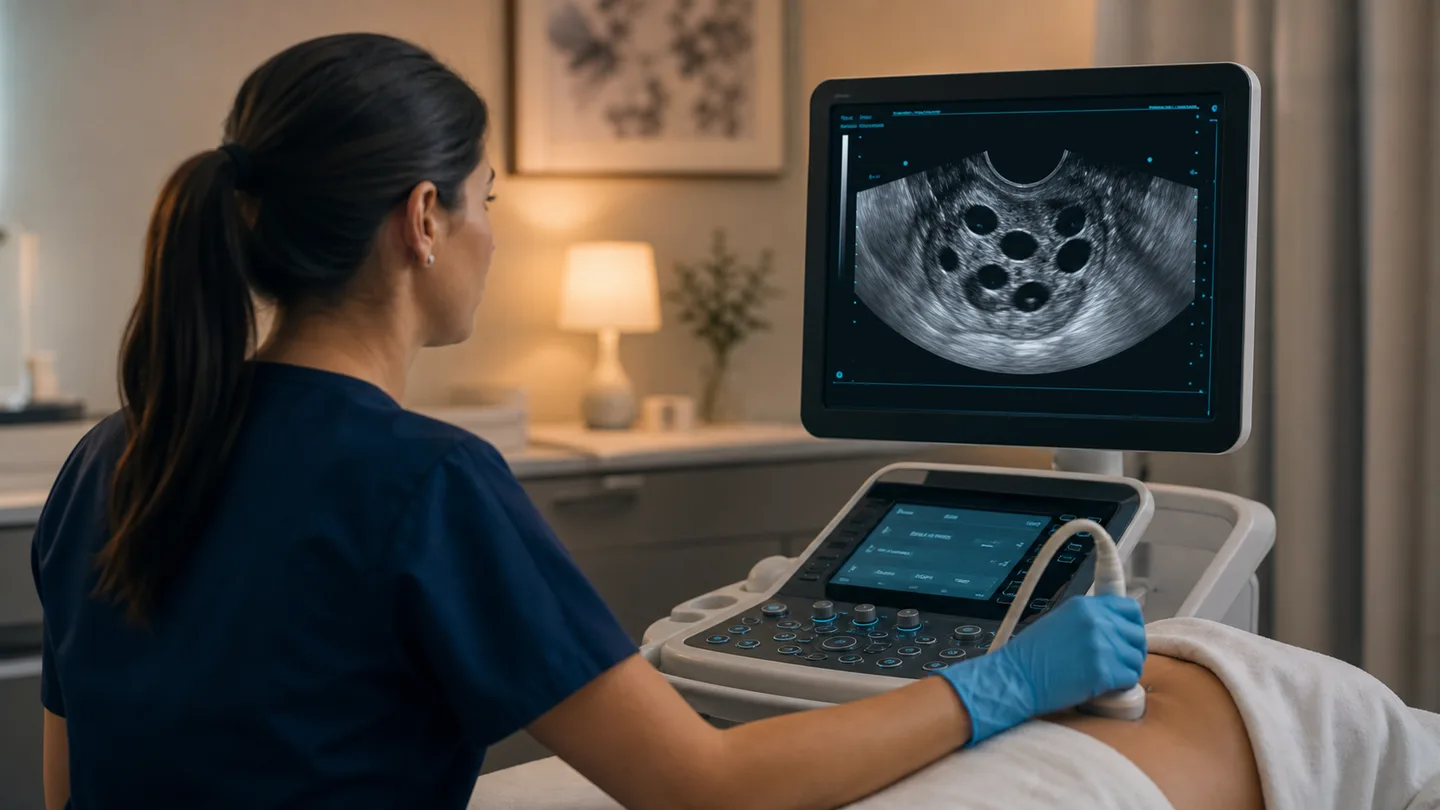
What is a follicle, and why monitor it?
A follicle is a small fluid-filled sac in the ovary where an egg develops. Monitoring uses ultrasound scans to assess follicle development and the uterine lining, known as the endometrium. The aim is to understand change across the cycle, not simply to obtain one measurement.
When might monitoring help?
It may be useful when assessing ovulation, investigating irregular cycles, using medicines to support ovulation or undergoing IVF. Monitoring a natural cycle and monitoring IVF stimulation have different goals and schedules. Not everyone needs the same number of scans.
Preparing for your scan
- Tell the team the first day of your last period and which medicines you use.
- Ask about bladder preparation for the planned approach. Transvaginal scans usually use an empty bladder; an abdominal scan may need different preparation.
- Mention previous painful examinations, bleeding or other concerns beforehand.
- Bring earlier scan and blood test results and allow for follow-up appointments.
How is the ultrasound performed?
A transvaginal scan is often used for a close view of the ovaries: a slim probe is gently placed in the vagina. The procedure should be explained and your consent obtained. Report pain or discomfort; you can ask to pause or stop. If this approach is unsuitable, alternatives and their limitations can be discussed.
Ultrasound does not use X-rays. The clinician may record follicle numbers and measurements and the appearance of the lining. Hormone blood tests may add to the assessment when needed.
What do the results mean?
Serial scans help assess the timing of ovulation, follow the response to medicines and plan the next step. Follicle size does not directly measure egg quality. Follicle count is not the same as the number of eggs that will be collected or the chance of pregnancy. Routine monitoring also cannot, on its own, determine whether the fallopian tubes are open.
Do not change medicine doses or the timing of a final maturation injection yourself. With an excessive response, the clinician may alter treatment, cancel some cycles or postpone transfer. These decisions aim to reduce risks such as OHSS and multiple pregnancy.
Why are several visits needed?
Growth and ovulation timing differ between people and even between cycles in the same person. There is no universal “day 14” rule. The next scan is scheduled according to the preceding findings.
When should I not wait?
During stimulation, contact the team promptly for increasing abdominal swelling, severe pain, persistent vomiting or reduced urination. Breathlessness, chest pain or fainting require emergency help; do not wait for your next scheduled scan.
Before leaving the appointment
Confirm what the findings mean, whether your medicine plan has changed and when to return. Discuss whether monitoring is appropriate at a consultation. If transfer is planned, read about preparation and aftercare as well.
Sources and using this information
Sources checked on 22 October 2026. The linked sources are in English. This page provides general information, not individual medical advice. Confirm treatment suitability, availability, timing and costs with the clinic.