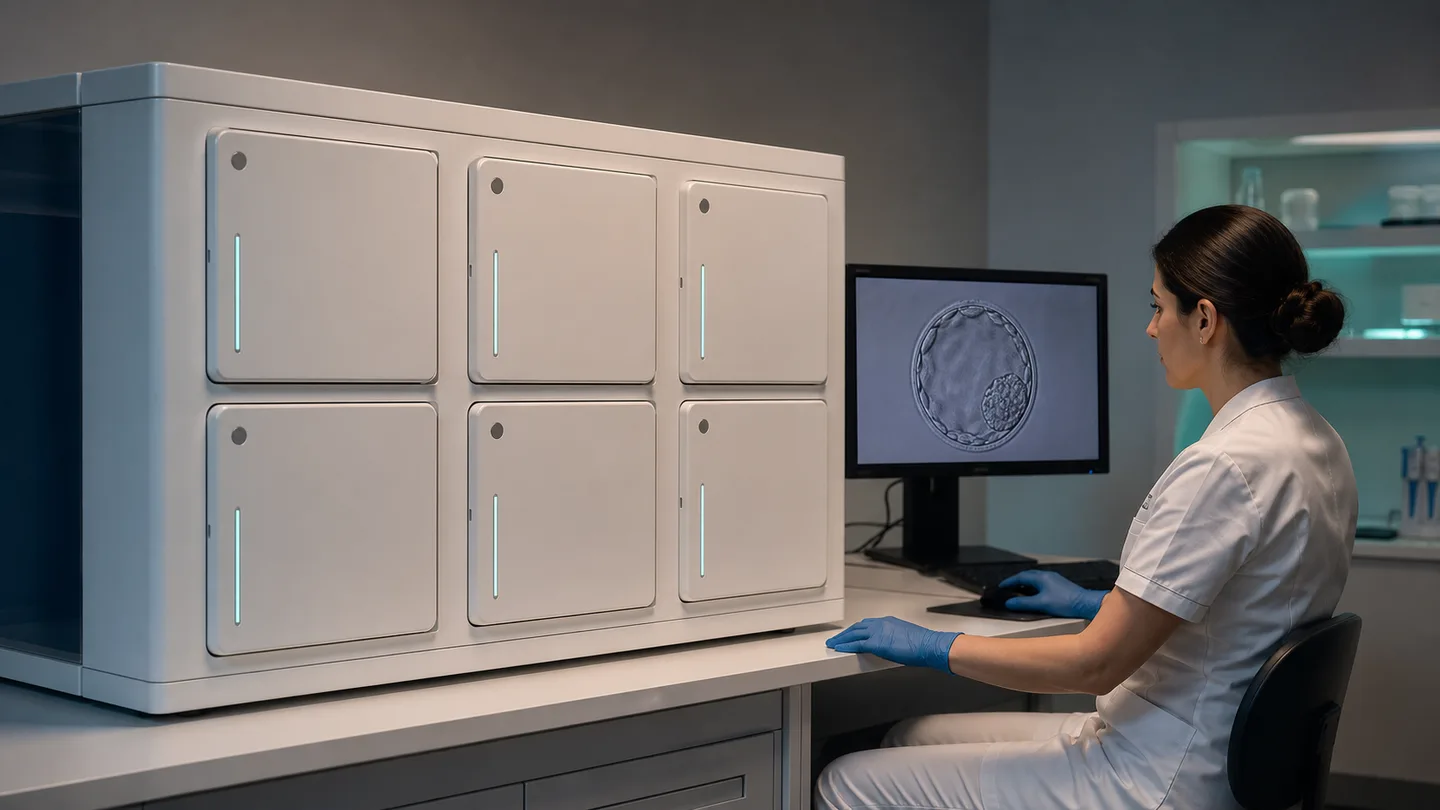
What does embryo transfer involve?
Embryo transfer places an embryo developed in the laboratory into the uterine cavity through a thin catheter. This does not mean that the embryo has already implanted or that pregnancy has begun. The outcome is assessed later with the scheduled test and follow-up investigations.
Fresh and frozen transfers
A fresh transfer takes place in the treatment cycle in which eggs are collected. A frozen transfer uses an embryo stored previously and warmed for use in a later cycle. The uterine lining, or endometrium, is prepared by monitoring a natural cycle or through an individual hormone plan. Its preparation is coordinated with the embryo's stage of development.
Timing is not simply a calendar decision. An excessive response to stimulation, the condition of the lining or other medical factors may change the plan. Postponing a fresh transfer can sometimes be the safer option.
Preparing for transfer
- Confirm medicine instructions, particularly the start time and schedule if progesterone is prescribed.
- Ask about bladder preparation; instructions depend on the ultrasound approach.
- Check identification and consent arrangements, the number of embryos to transfer and plans for any stored embryos.
- Get the pregnancy test date and out-of-hours contact instructions in writing.
What happens during the procedure?
A speculum is usually used to view the cervix, and a thin, soft catheter carries the embryo into the uterus. Ultrasound guidance may be used, and anaesthesia is often unnecessary. Tell the team beforehand if you are anxious or have previously found pelvic examinations difficult.
For suitable patients, transferring one embryo helps reduce the risk of multiple pregnancy. More embryos do not automatically mean a better outcome. The decision takes account of the embryos, age, previous treatment and safety.
The days after transfer
Routine bed rest has not been shown to improve results. Unless you have individual restrictions, ordinary light daily activities can usually resume. Advice on exercise and sex should reflect your circumstances, particularly if you recently had egg collection.
Mild cramps or spotting do not tell you the result; having no symptoms does not mean failure either. Do not stop medicines yourself. An early home test may mislead you, so follow the date given by the team.
When is urgent help needed?
Severe or one-sided abdominal pain, shoulder-tip pain, fainting, heavy bleeding or breathlessness require urgent medical assessment. Ectopic pregnancy is still possible after transfer. Report increasing swelling or vomiting after recent stimulation promptly as well.
What happens after a positive test?
Follow the blood test and ultrasound plan to assess the pregnancy's location and progress. If the test is negative, discuss medicines and next steps with the team. Read about the wider IVF process or how monitoring helps guide treatment.
Sources and using this information
Sources checked on 22 October 2026. The linked sources are in English. This page provides general information, not individual medical advice. Confirm treatment suitability, availability, timing and costs with the clinic.