Frozen embryo thaw survival: what does it mean?
Understand how a vitrified embryo is warmed, what laboratory survival means, how re-expansion is assessed and how the transfer plan can change.

Frozen embryo thaw survival describes whether a vitrified embryo retains sufficient cell integrity and developmental potential after controlled warming. Although everyday language calls it “thawing”, the laboratory performs rapid warming followed by the stepwise removal of cryoprotectants rather than waiting for a block of ice to melt slowly.
Survival with modern vitrification is often high, but it is never guaranteed. It depends on the embryo’s stage and condition when frozen, the technical protocol, staff experience and storage integrity. Asking for the clinic’s own freeze–warm performance is more useful than relying on a general percentage found online.
How the warming process is performed
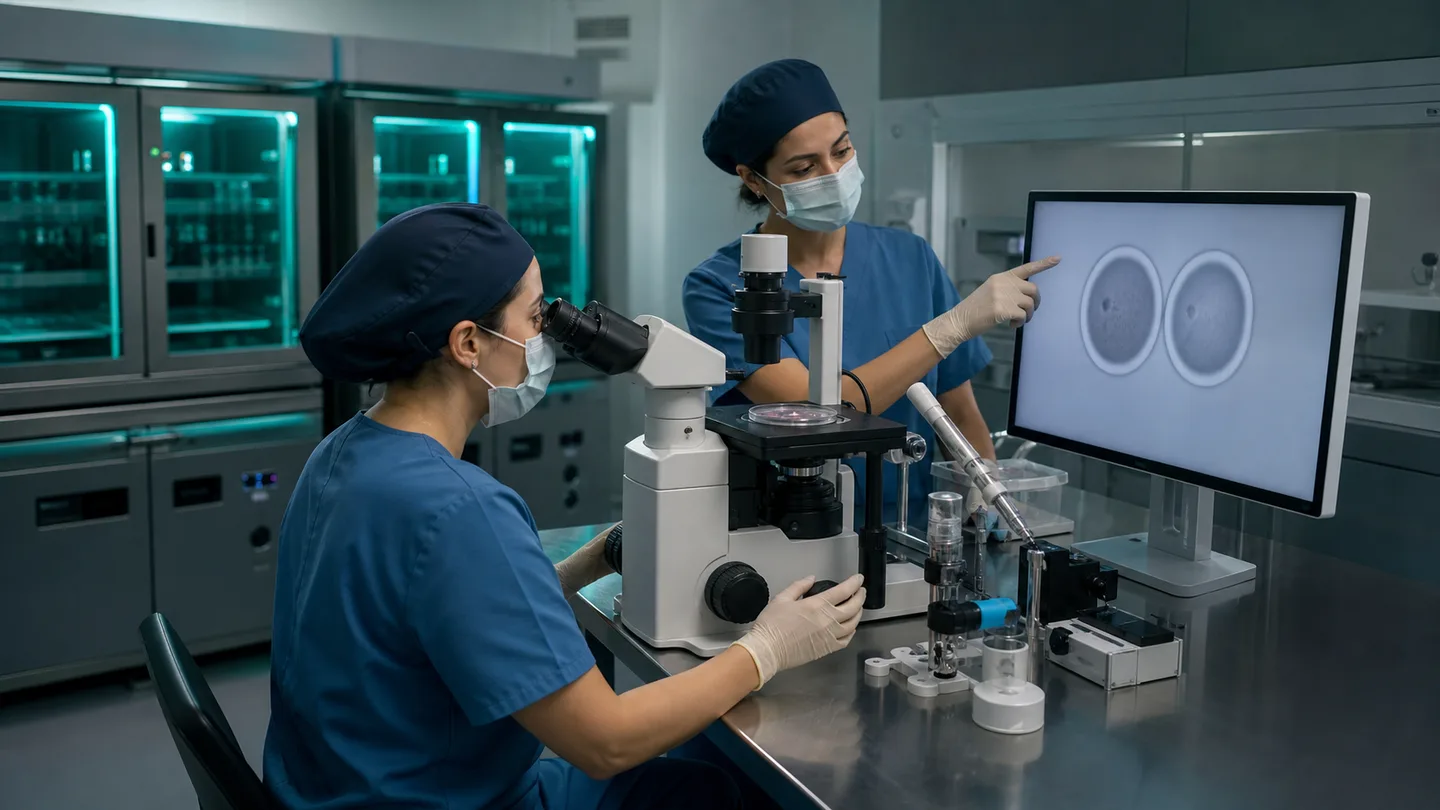
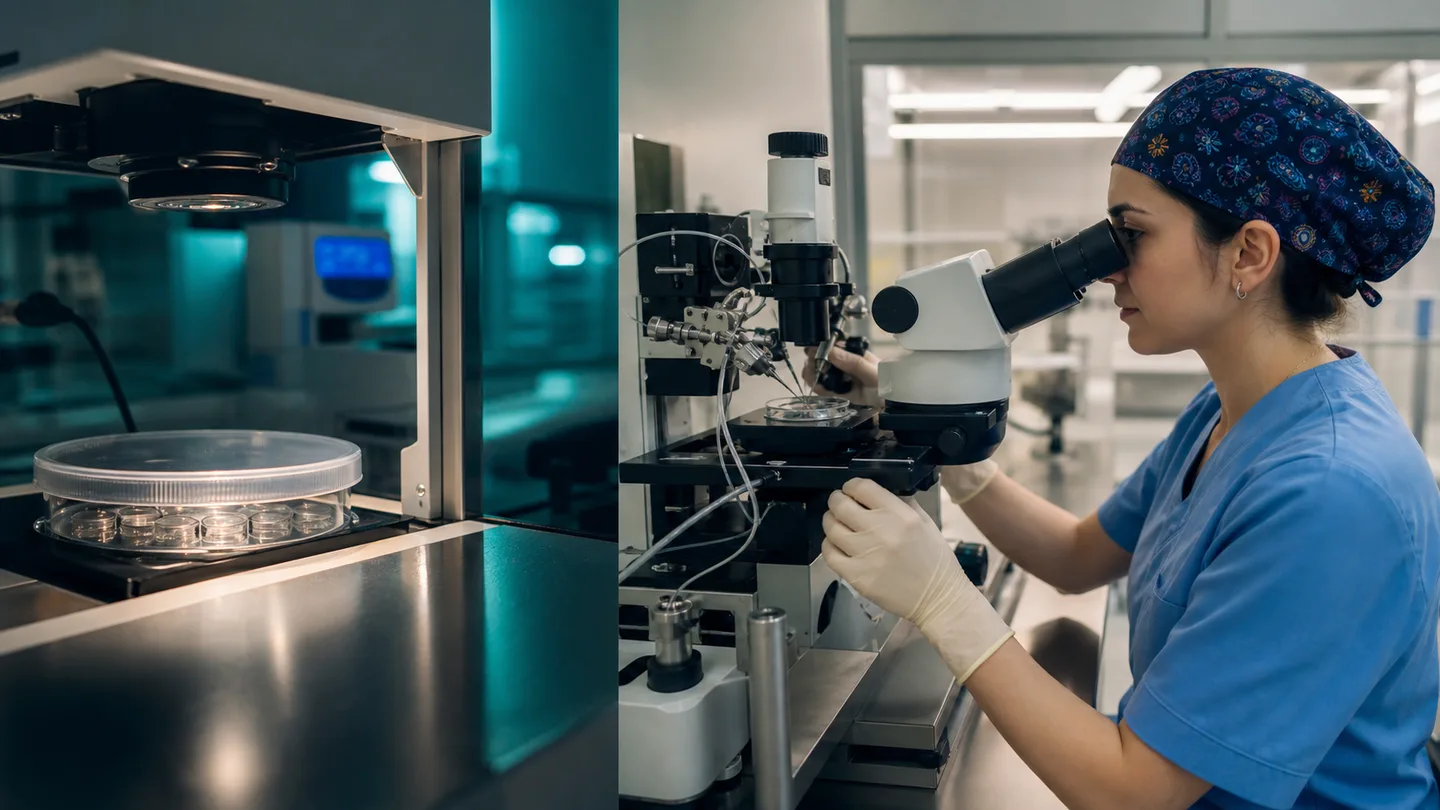
Once a carrier leaves cryogenic storage, the embryo is moved immediately into a specialised warm solution. It then spends exact short periods in solutions with decreasing cryoprotectant concentration. This allows water to return safely to cells while limiting injury from sudden osmotic change.
Identity is verified through witnessing at every critical transition. The embryo is placed in culture and allowed to recover in an incubator. Before transfer, an embryologist may assess cell integrity, return of the blastocyst cavity and signs of continued development. Details vary with the stage that was frozen.
- Rapid move from cryogenic storage to warm solution
- Stepwise removal of cryoprotectants
- Recovery culture and morphological assessment
What “survived” means in a report
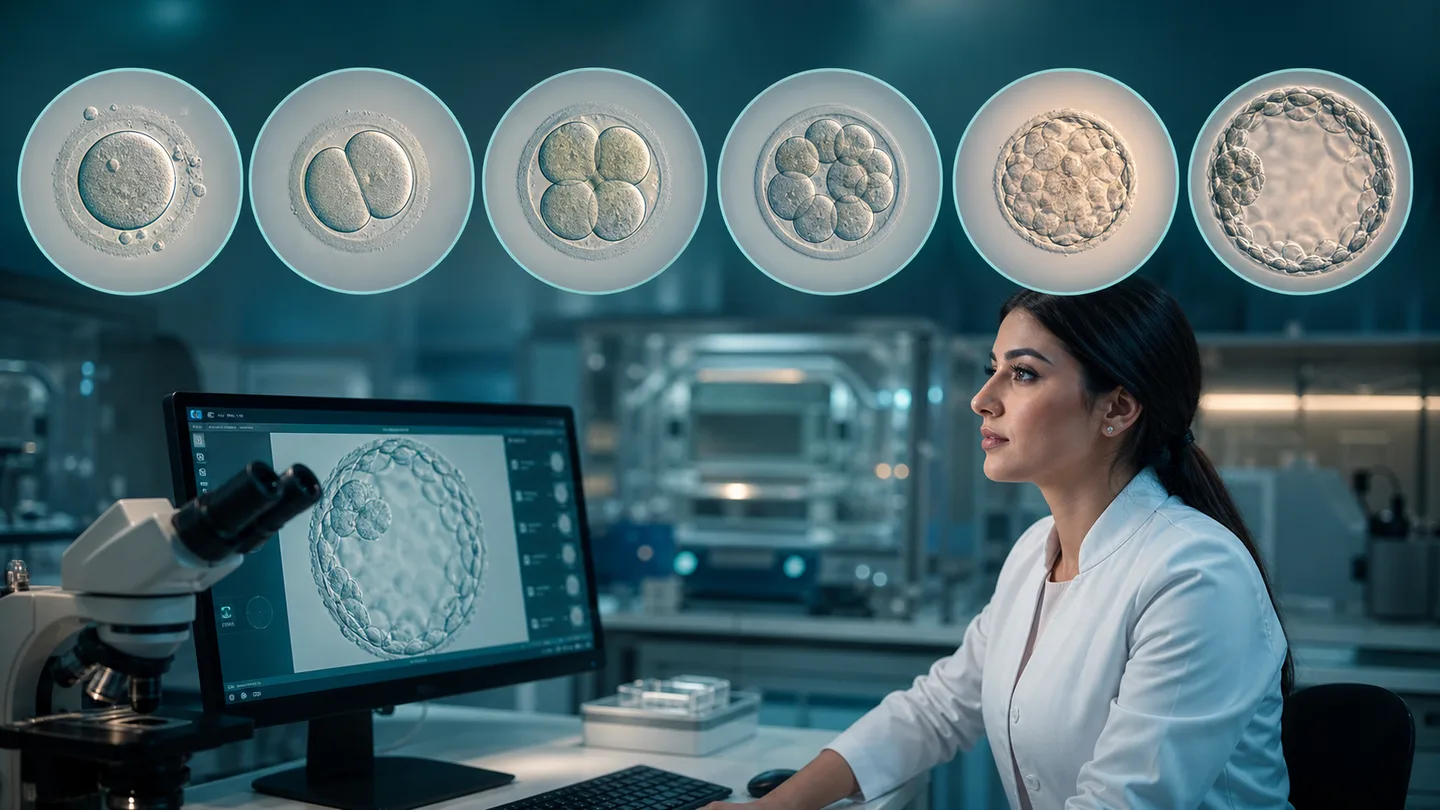
A blastocyst cavity commonly collapses before freezing. Re-expansion after warming is a positive sign but may not happen immediately. The laboratory also looks at cells in the inner cell mass and trophectoderm. Definitions of complete and partial survival can vary with protocol.
An embryo with a small number of damaged cells may still be considered suitable for transfer, while extensive injury may make it unsuitable. Survival describes morphology at that point. It cannot guarantee implantation, chromosome status, pregnancy continuation or live birth.
- Integrity of cell membranes and structures
- Re-expansion of the blastocyst cavity
- The laboratory definition of complete or partial survival
What happens after poor or partial survival?
When more embryos are stored, consent should state the order and circumstances in which another will be warmed. A laboratory should warm a second embryo automatically only within the agreed number and plan. Otherwise it may need to contact the patient and obtain a new decision.
The report should record the frozen identifier, warming date, survival assessment, transferred embryo and status of any unused embryos. With partial survival, the embryologist should explain why transfer remains reasonable. If the cycle is cancelled, clear explanation, emotional support and follow-up consultation should be offered.
- Advance consent for the order of additional warming
- Documented survival and transfer decision
- Explanation and follow-up if transfer is cancelled
Frequently asked questions
Is a blastocyst that does not re-expand immediately unusable?
Not necessarily. Some embryos need more recovery time. The decision uses cell integrity, observation duration and the laboratory’s validated criteria.
Does a surviving embryo have the same chance as a fresh embryo?
Personal probability depends on age, embryo characteristics, freezing stage, uterine preparation and clinical history. Survival alone cannot guarantee an equal outcome.
Ask the Övlad Payı laboratory to explain its frozen embryo thaw survival definition, local rate and consent for warming another embryo in advance. A clear plan B reduces uncertainty on transfer day.
Trusted sources
This article is for patient education and does not replace individual medical advice.