IVF versus ICSI: how the laboratory chooses a method
Understand how sperm and eggs meet in conventional IVF and ICSI, when microinjection may be justified and what it cannot guarantee.
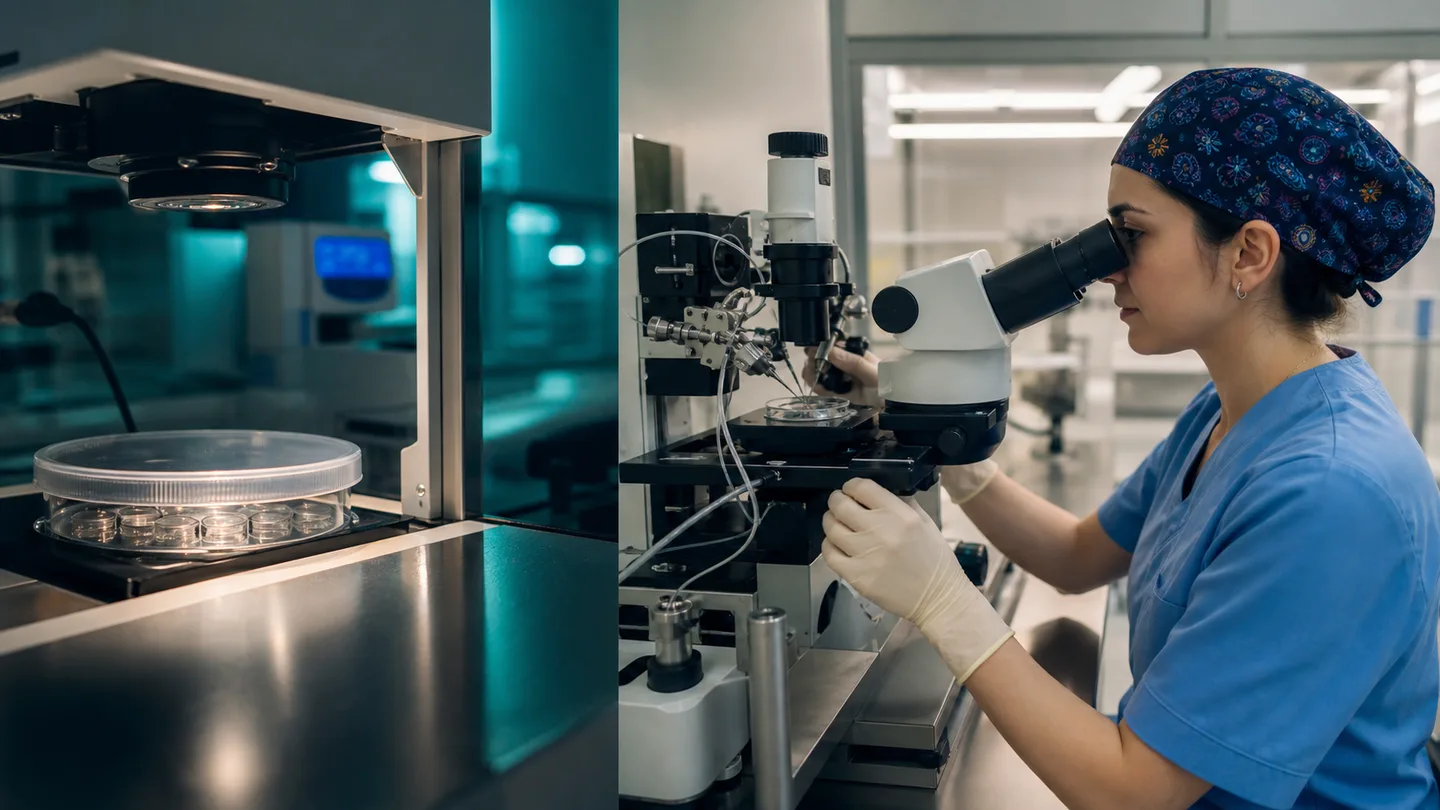
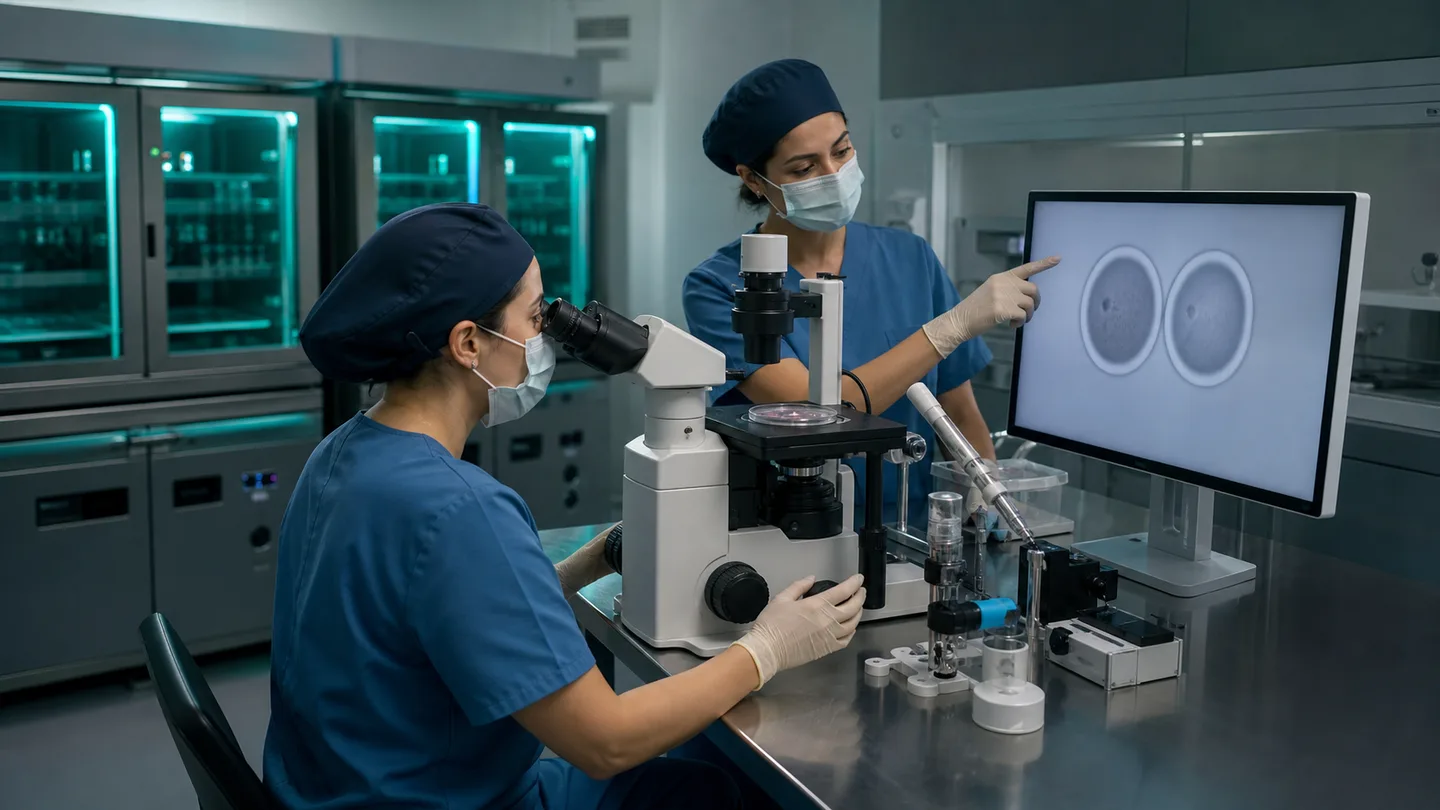
IVF versus ICSI describes a difference in how sperm and eggs are brought together in the laboratory, not in ovarian stimulation or egg retrieval. With conventional IVF, prepared sperm are placed around each egg. With ICSI, an embryologist selects one sperm and injects it into a mature egg using a microscope and micromanipulation equipment.
ICSI is more technically invasive and labour intensive, but is not automatically better because it is more active. Its main role is to overcome particular barriers to sperm entering the egg, including important sperm factors and previous fertilisation problems. The choice should be justified by diagnosis, the current sample, previous outcomes and laboratory policy.
How conventional IVF works in the laboratory
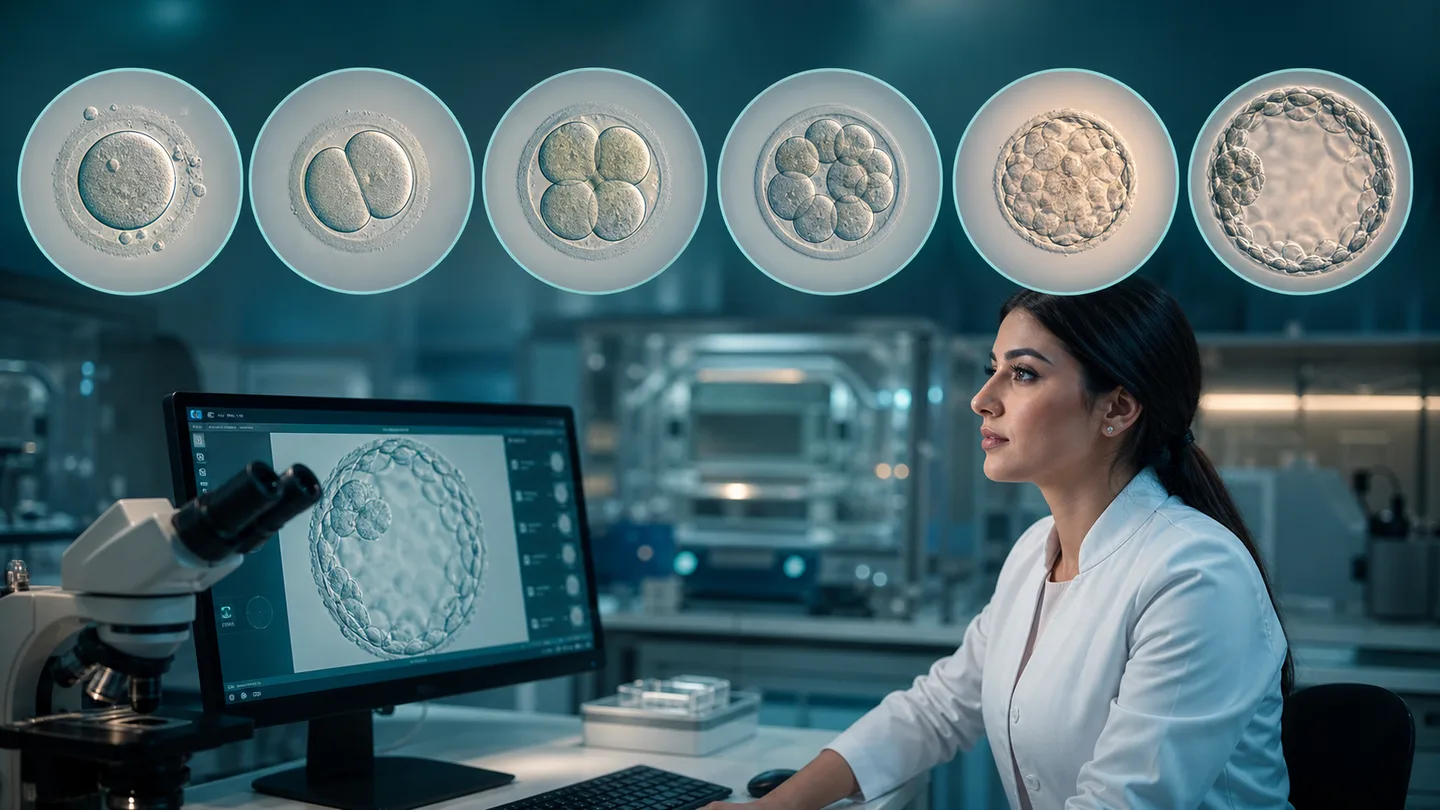
Retrieved eggs are placed in culture with a prepared concentration of motile sperm. A sperm must pass through the surrounding cells and enter the egg without injection. The next day, the embryologist checks for normal signs of fertilisation. The method leaves part of sperm selection to the biological process.
Conventional IVF may be suitable when sperm count and movement are adequate, there has been no serious prior fertilisation problem and no other specific indication exists. It still cannot guarantee that every egg will fertilise. Rarely, total fertilisation failure occurs and the method may be reconsidered in a later cycle.
- Many prepared sperm are placed around each egg
- A sperm enters without direct injection
- Normal fertilisation is checked the following day
When ICSI may be considered
ICSI may be considered for low sperm count or movement, severe morphology problems, surgically retrieved sperm, previous low or absent fertilisation and selected PGT circumstances. The evidence is not equally strong for every reason. The laboratory should assess the sample and explain the specific indication.
The embryologist removes surrounding cells, identifies mature eggs and selects a sperm that appears suitable for each injection. This visual selection cannot reveal all chromosomes or predict the future. ICSI can assist the fertilisation step but cannot correct poor embryo development, prevent miscarriage or guarantee implantation.
- Male-factor or previous fertilisation indication
- Microinjection into mature eggs only
- Help with fertilisation, not a pregnancy guarantee
Questions to ask before deciding
Begin with: “What is the specific medical reason for ICSI in our case?” Ask whether conventional IVF, ICSI or a split approach is feasible for your egg number and history. Discuss the expected benefit in terms of fertilisation separately from any estimate of live birth.
Ask about additional cost, the small possibility of egg damage during injection and how immature eggs will appear in the report. If the plan could change on retrieval day, the criteria should be included in consent beforehand. No method should be treated as an automatic add-on without informed agreement.
- Ask for the personal indication and likely benefit
- Separate fertilisation outcomes from live birth
- Agree the alternative plan and cost before retrieval
Frequently asked questions
Does ICSI create better-quality embryos?
Not necessarily. ICSI assists sperm entry into an egg. Later embryo quality depends on many factors, including egg and sperm biology, genetics and development.
Does ICSI confirm the selected sperm is genetically healthy?
No. An embryologist can assess appearance and movement, but cannot see all genetic information under the microscope or guarantee the outcome.
Discuss IVF versus ICSI with the Övlad Payı embryology team using the semen findings, previous history and your individual indication. Knowing the reason in writing supports a more informed decision about laboratory treatment.
Trusted sources
This article is for patient education and does not replace individual medical advice.