
Embryology laboratory
Evidence-led guides that explain laboratory stages, terminology and safety systems from fertilisation through embryo freezing.
Articles in this topic
Articles: 10
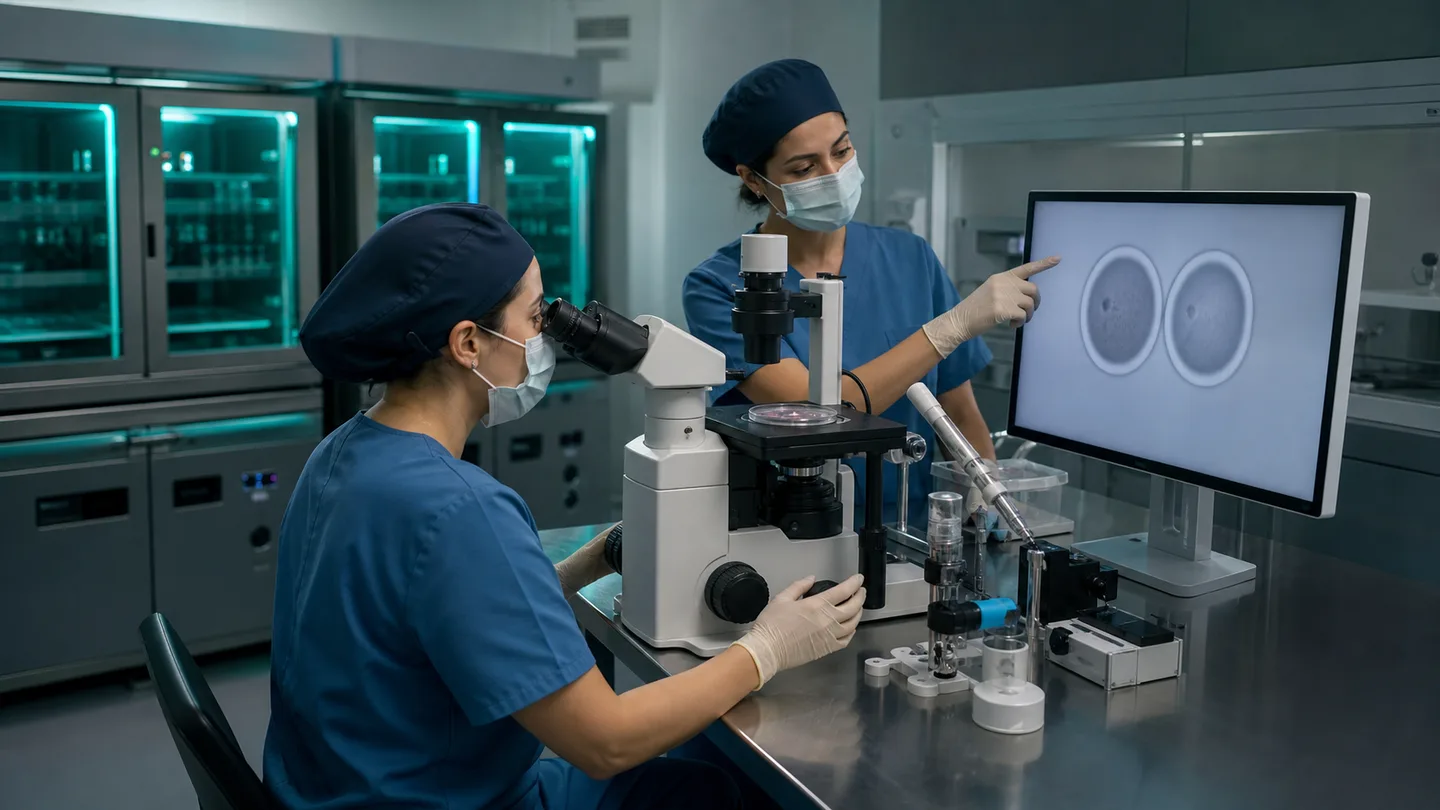
How fertilisation is assessed: what embryologists look for
Understand the difference between collected eggs, mature eggs and normal fertilisation, including the pronuclear check and update timing.
Read article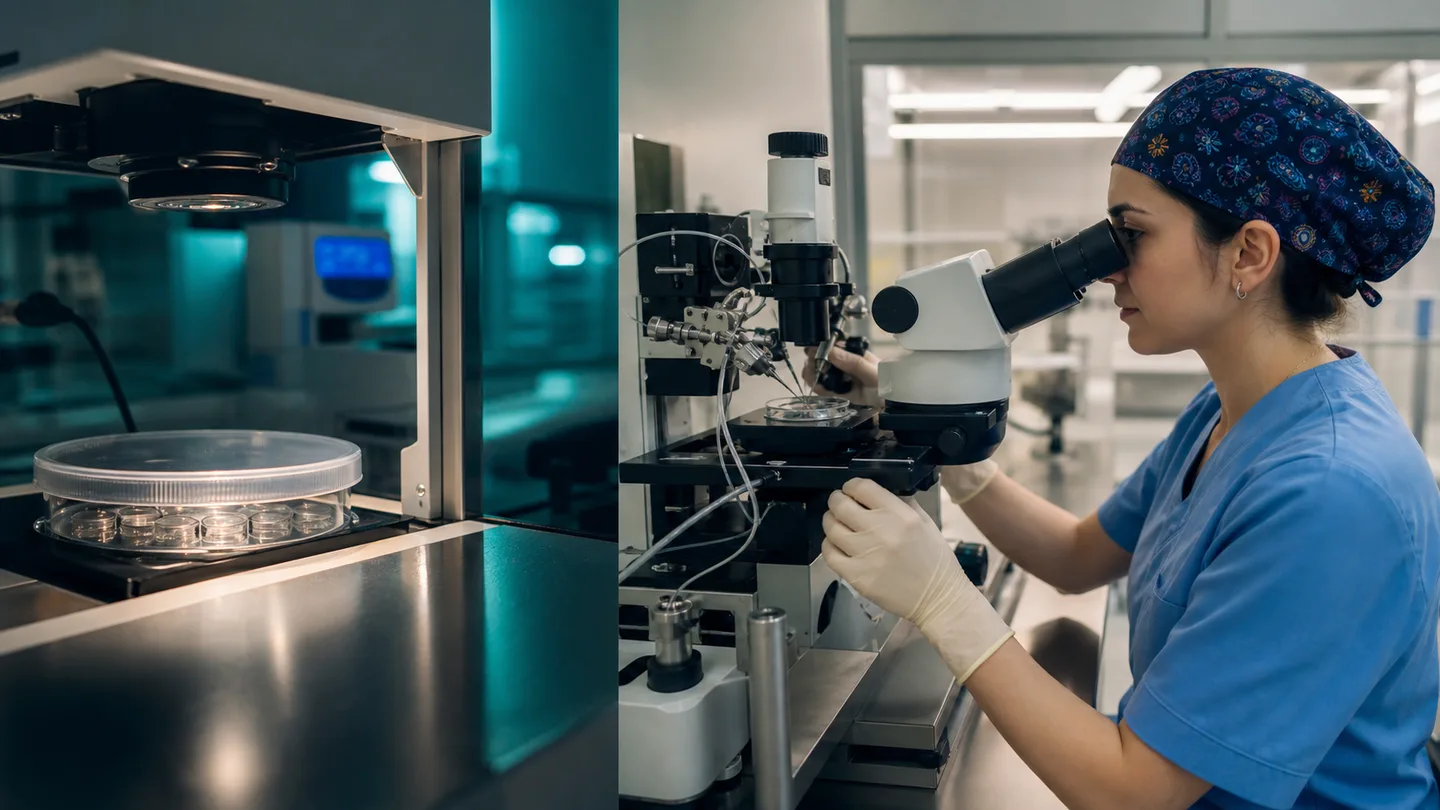
IVF versus ICSI: how the laboratory chooses a method
Understand how sperm and eggs meet in conventional IVF and ICSI, when microinjection may be justified and what it cannot guarantee.
Read article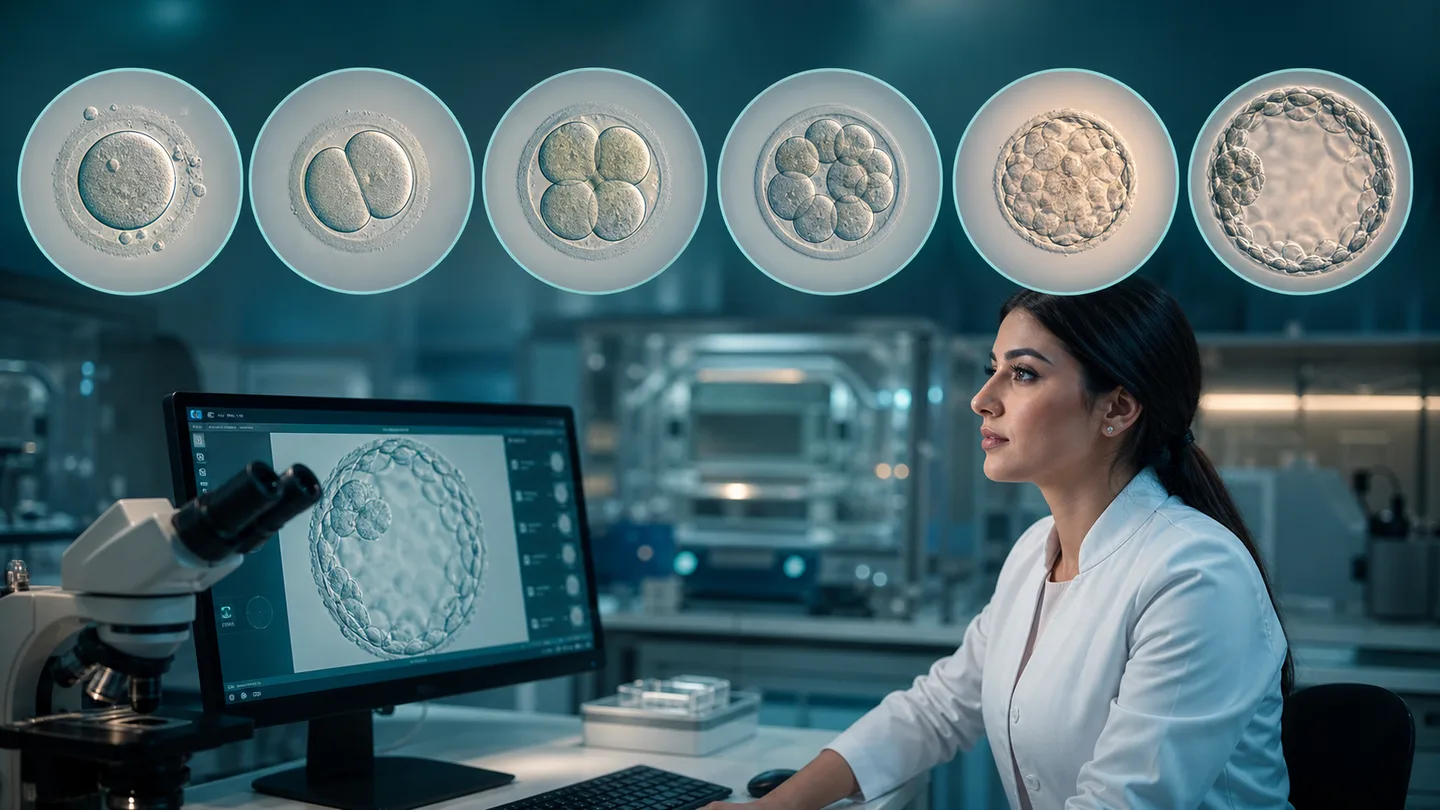
Embryo development days 1–6: a laboratory map
Follow a fertilised egg through pronuclei, cleavage, morula and blastocyst stages, while understanding the limits of each daily update.
Read article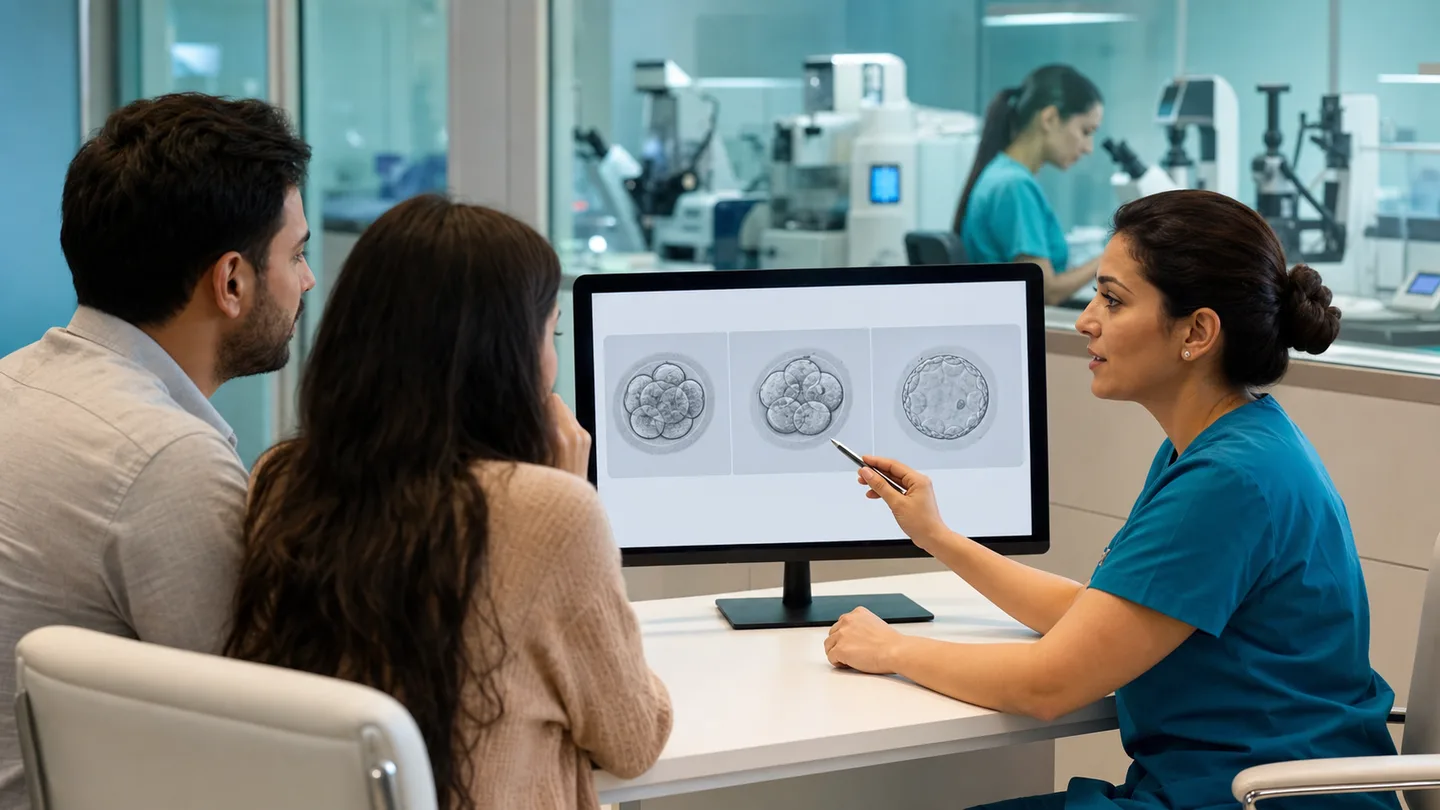
Embryo grading: what the letters and numbers mean
Learn how cleavage-stage and blastocyst grades are assigned, why laboratories can differ and what a grade cannot promise.
Read article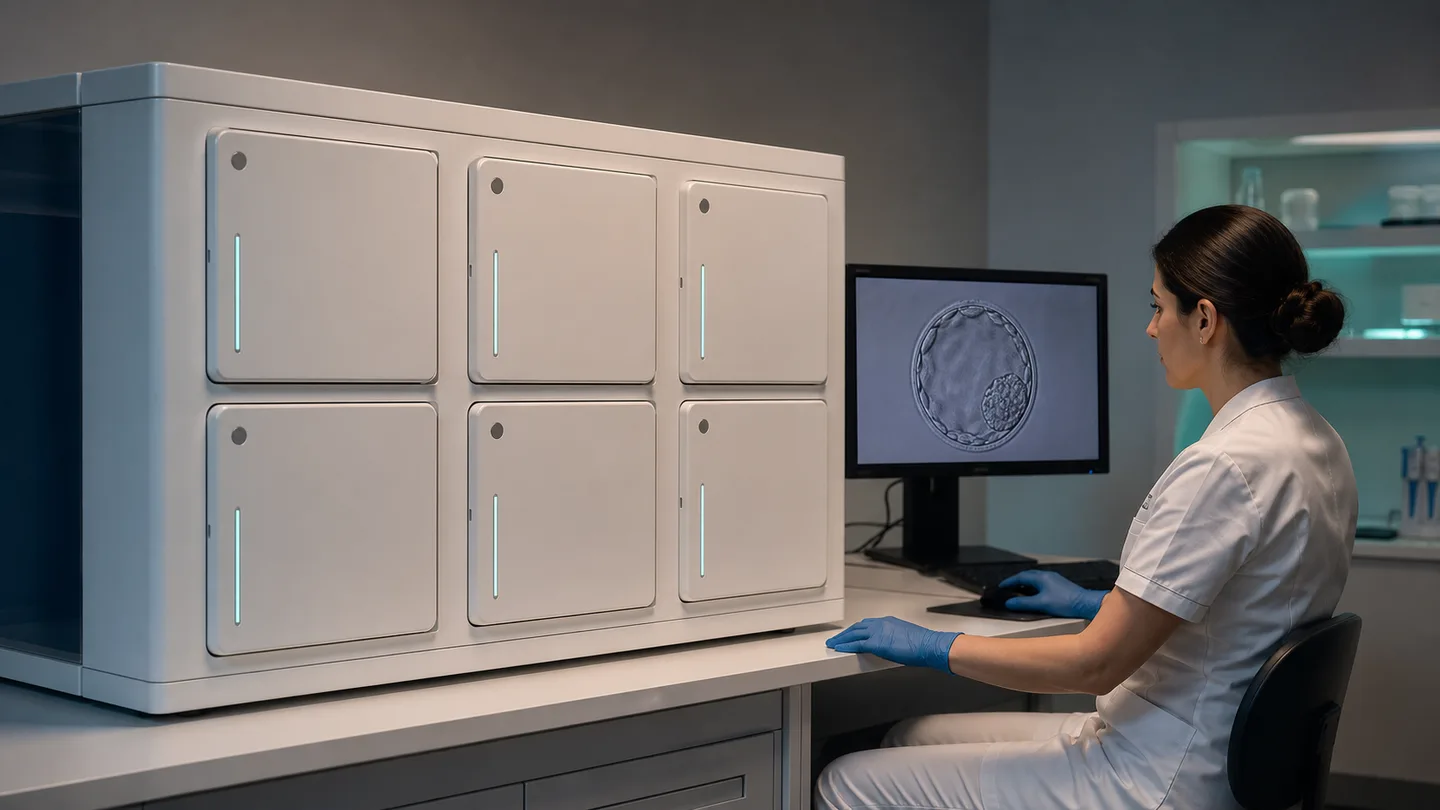
Blastocyst culture: waiting until days five and six
Understand why embryos may be cultured to blastocyst, how it can support selection and the possibility that no embryo remains for transfer.
Read article
Time-lapse embryo monitoring: what the camera shows
Understand how images are taken inside an incubator, the value of stable culture and why a video or algorithm cannot guarantee an outcome.
Read article
Embryo vitrification: rapid freezing and secure storage
Understand how blastocysts are rapidly frozen, which embryos are selected and what consent, storage and future-use decisions involve.
Read article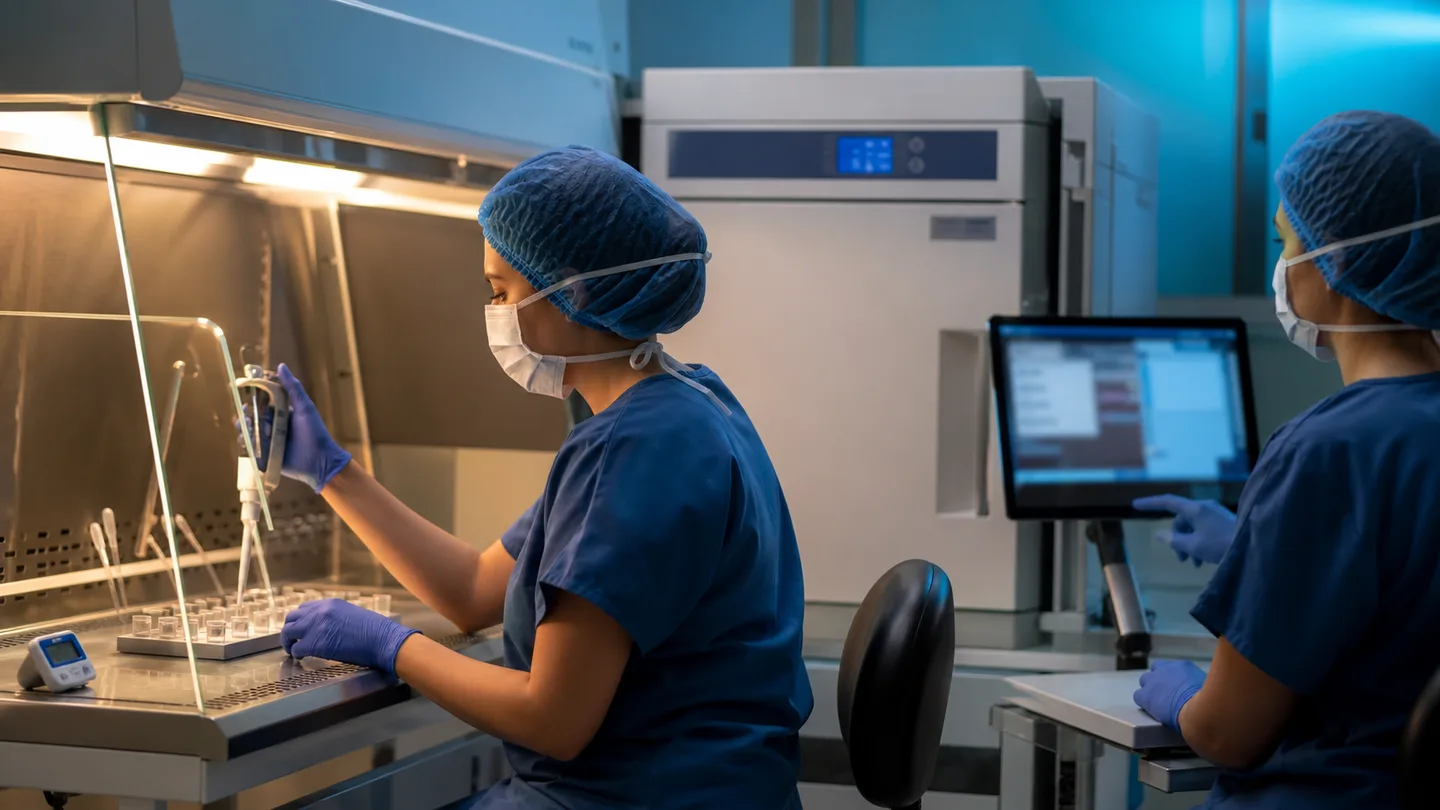
Frozen embryo thaw survival: what does it mean?
Understand how a vitrified embryo is warmed, what laboratory survival means, how re-expansion is assessed and how the transfer plan can change.
Read article
Preimplantation genetic testing: types and limits
Understand PGT-A, PGT-M and PGT-SR, blastocyst biopsy, mosaic or inconclusive results and why prenatal testing may still be advised.
Read article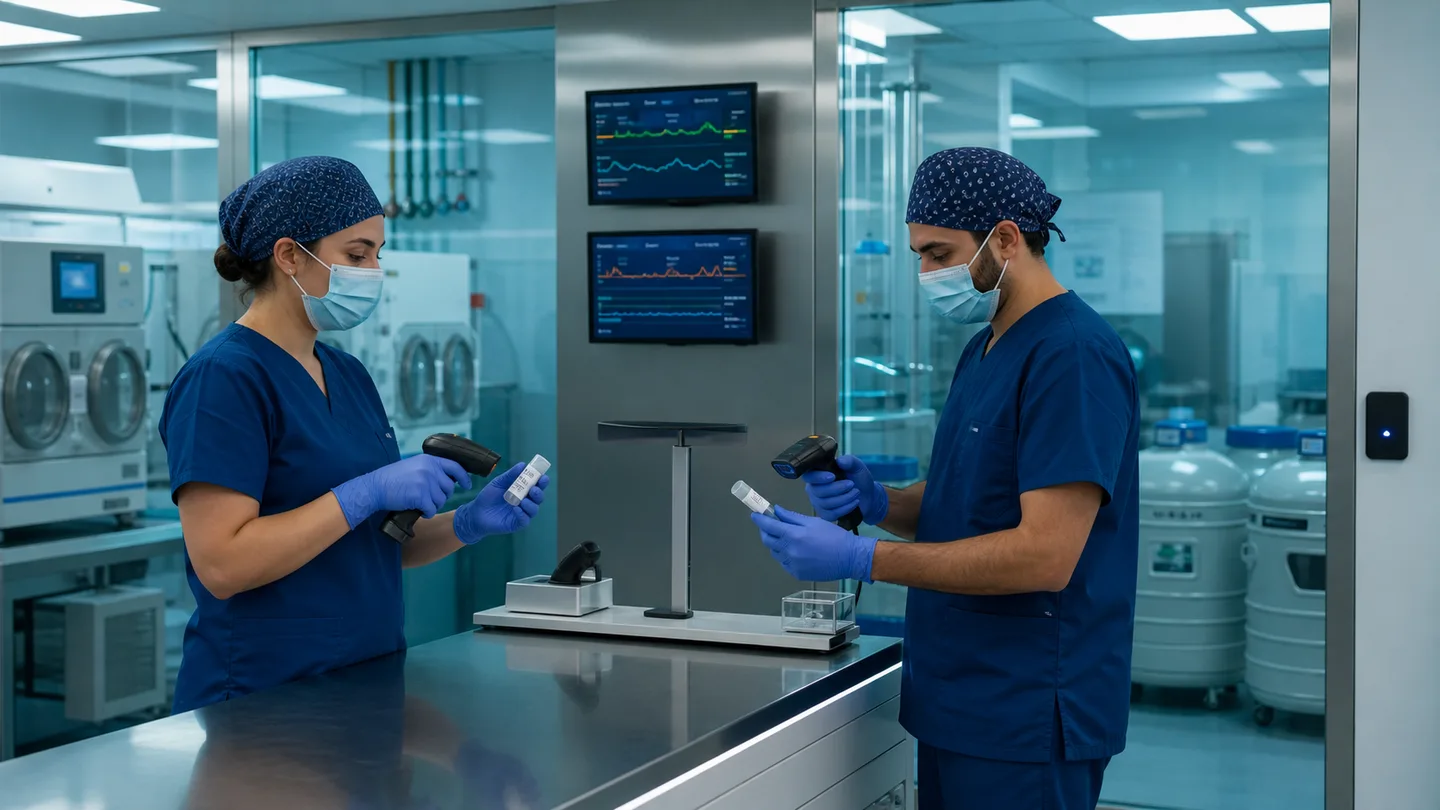
IVF laboratory safety: identity and quality systems
Understand how eggs, sperm and embryos remain linked to the right patient, and how witnessing, incubator monitoring and emergency plans reduce risk.
Read articleRelated clinic services
Explore our services. The right approach for you is determined during an individual consultation with your clinician.
ICSI places one sperm directly into a mature egg. Learn how it differs from conventional IVF and when it may be appropriate.
Embryo transferLearn about fresh and frozen embryo transfer, preparing for the procedure and what to expect while waiting for your pregnancy test.
Fertility preservationExplore egg, sperm and embryo freezing, their limitations and the questions to ask when planning for possible future parenthood.