Preimplantation genetic testing: types and limits
Understand PGT-A, PGT-M and PGT-SR, blastocyst biopsy, mosaic or inconclusive results and why prenatal testing may still be advised.

Preimplantation genetic testing analyses a small cell sample from embryos created through IVF. PGT is not one test: PGT-A screens chromosome number, PGT-M examines a specific single-gene condition and PGT-SR investigates known structural chromosome rearrangements. Purpose and suitability depend on the family’s genetic context.
Testing cannot guarantee a healthy child, check every genetic condition or promise higher live birth for every patient. The sample comes from trophectoderm cells that contribute mainly to the placenta, not from the entire embryo. Biopsy and analysis provide a classification based on that limited sample.
What PGT-A, PGT-M and PGT-SR are used for
PGT-A screens whether embryos appear to have the expected number of chromosomes. Aneuploidy increases with age, so results may inform transfer order in selected groups, but higher cumulative live birth has not been shown for every patient. Personal benefit and the chance of fewer transferable embryos need discussion.
PGT-M requires a customised laboratory work-up when a specific pathogenic variant is known in a family. PGT-SR assesses the risk of an unbalanced embryo when a parent has a rearrangement such as a translocation or inversion. Genetic counselling, confirmation of parental findings and sometimes family samples are needed first.
- PGT-A: screening chromosome number
- PGT-M: customised testing for a known monogenic condition
- PGT-SR: structural chromosome rearrangements
Biopsy and the result pathway
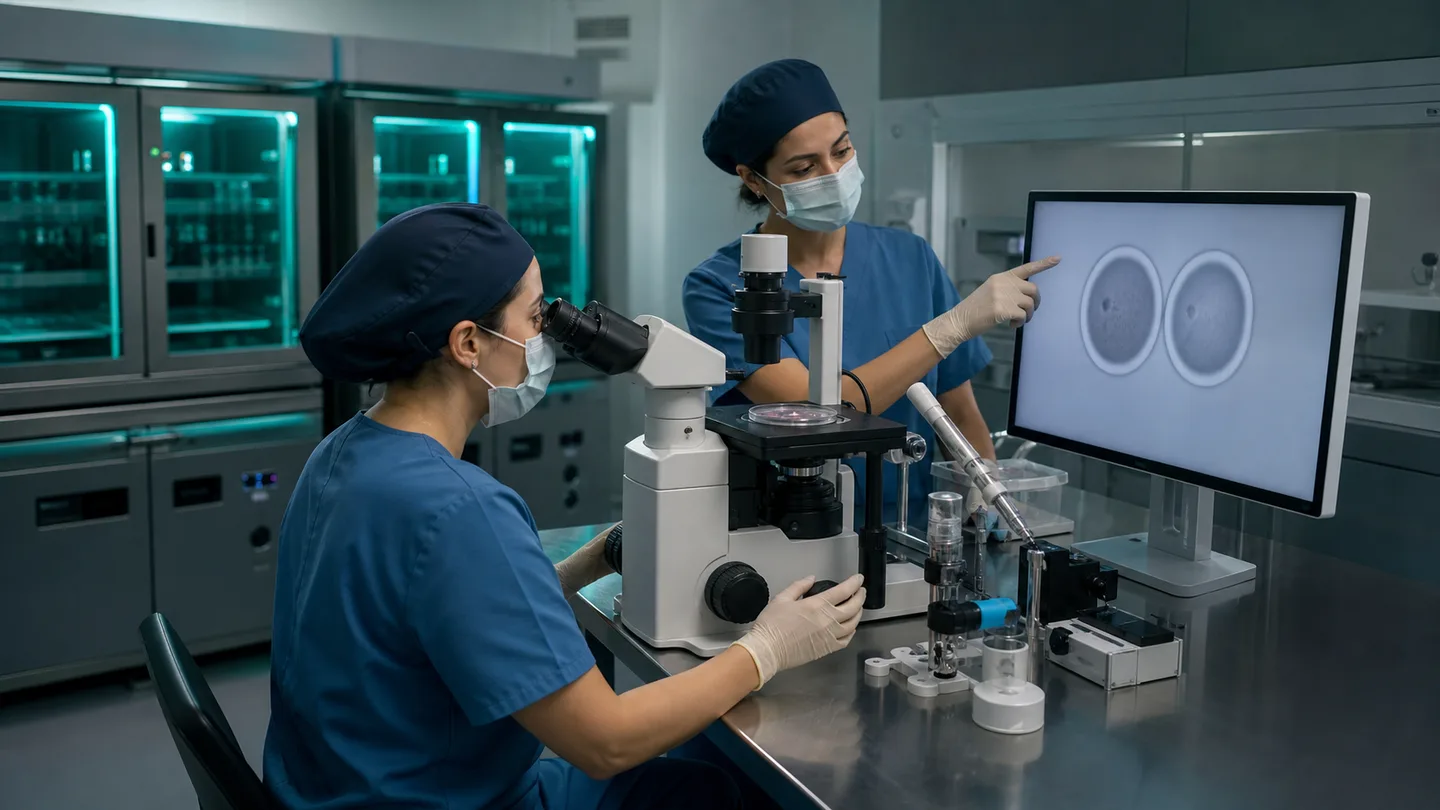
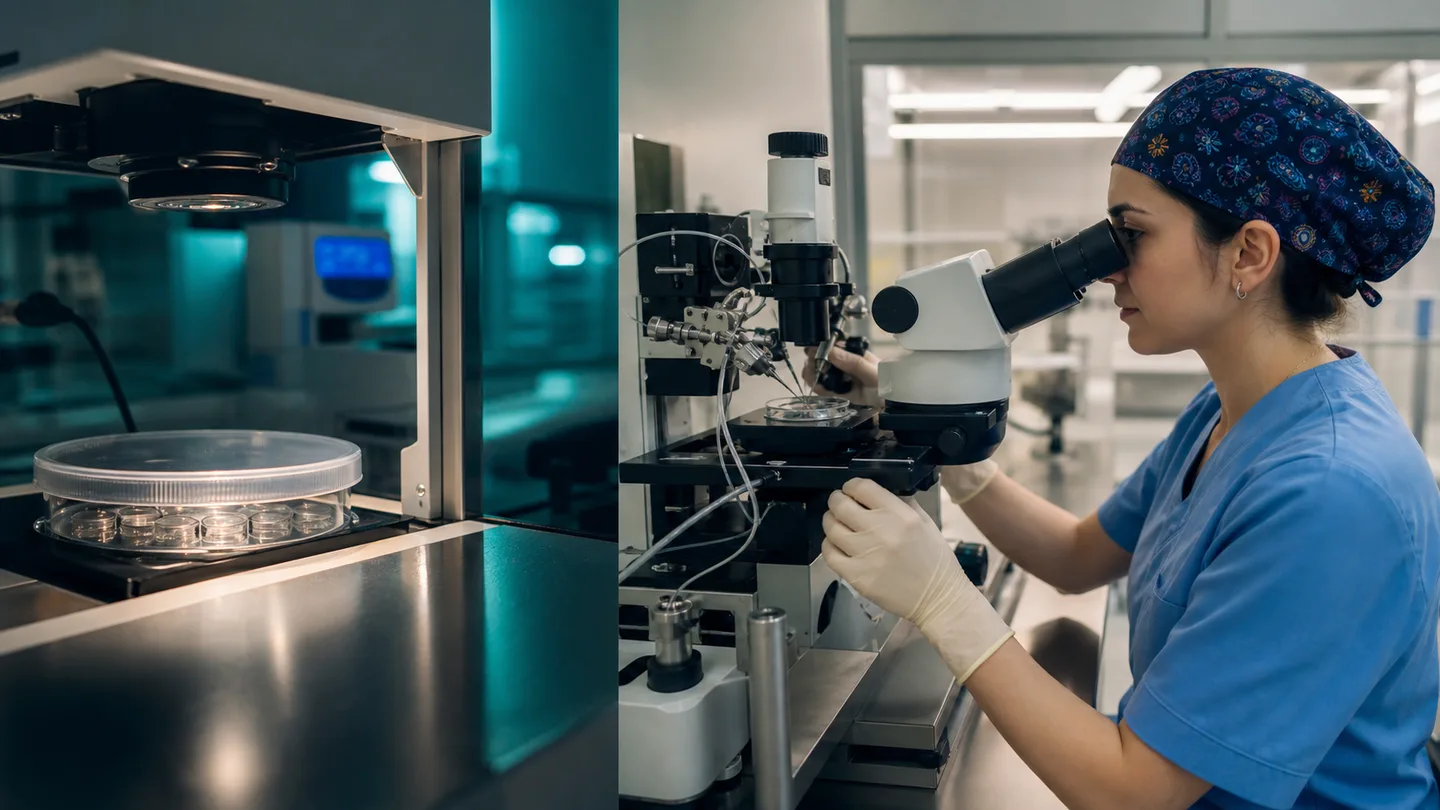
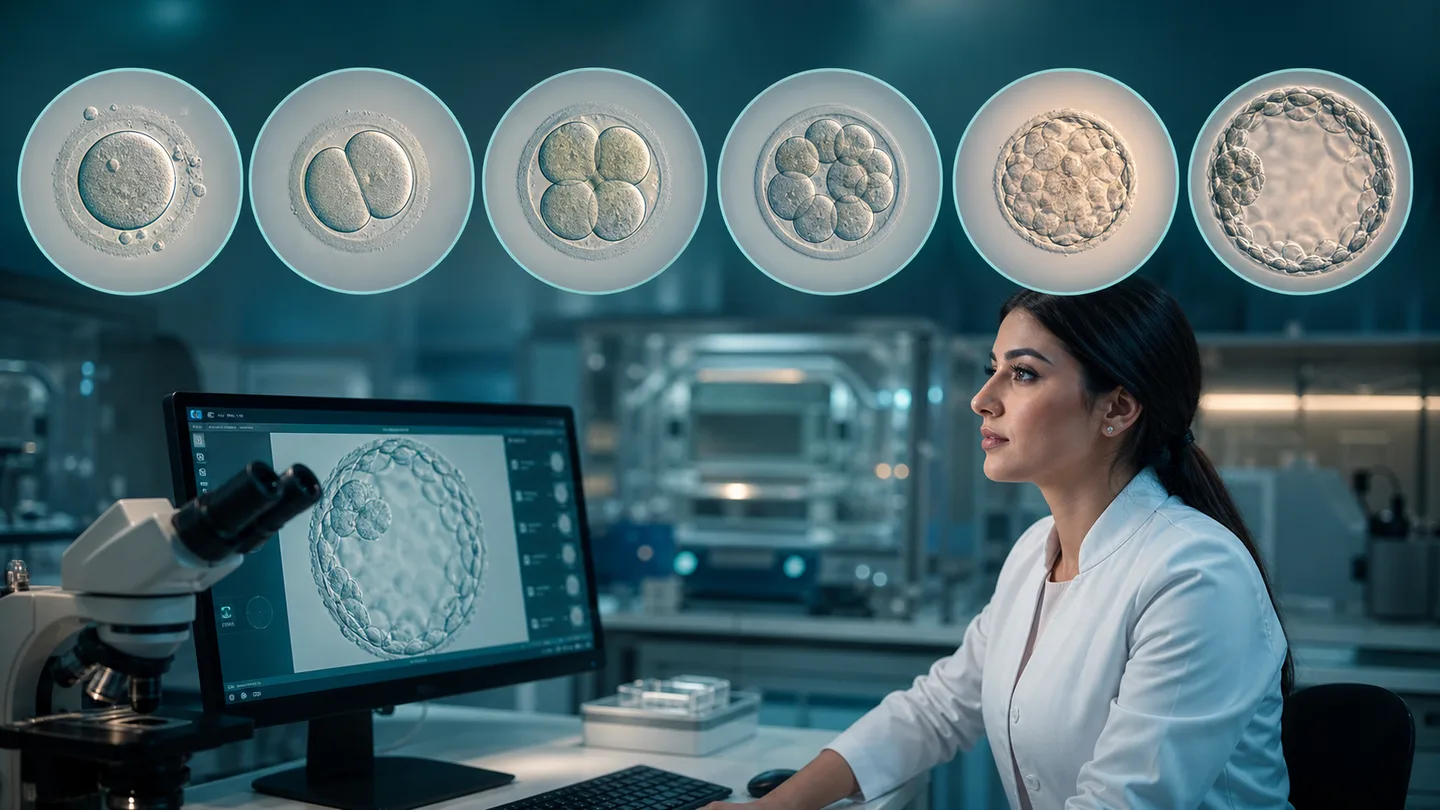
Several trophectoderm cells are usually removed from a suitable blastocyst, the embryo is vitrified and the sample goes to a genetics laboratory. Biopsy requires experience and quality control. Small risks include cell injury, an inconclusive sample and consideration of repeat biopsy.
A result may be euploid, aneuploid, mosaic, inconclusive or another category relevant to the test. Mosaic means mixed cell signals in the sample; it does not prove every cell in the embryo is mixed in the same way. Transfer decisions need genetic counselling, laboratory policy and consideration of alternatives.
- Trophectoderm biopsy at blastocyst stage
- Embryo freezing while the sample is analysed
- Possible euploid, aneuploid, mosaic or inconclusive result
Limits and confirmation during pregnancy
PGT checks only the targets within the selected technology. It cannot exclude new variants, multifactorial conditions, birth defects or every genetic change. Laboratory error, mosaicism and imperfect representation of the embryo mean false-positive or false-negative results cannot be reduced to zero.
After pregnancy, routine prenatal screening and diagnostic options such as chorionic villus sampling or amniocentesis may still be discussed. Excluding an embryo from transfer can be irreversible; read consent about storage, future use or disposal without rushing.
- A targeted test rather than a complete health screen
- Residual possibility of error and mosaicism
- Prenatal screening and diagnostic counselling still relevant
Frequently asked questions
Does a normal PGT-A result guarantee a healthy baby?
No. It screens chromosome number in a sample. It cannot assess every gene, birth defect, pregnancy event or future health outcome.
Can a mosaic embryo never be transferred?
It is not an automatic rule. The type and level, alternatives, laboratory policy and detailed genetic counselling contribute to an individual decision.
Before choosing preimplantation genetic testing at Övlad Payı, discuss its purpose, result categories, error possibility, effect on available embryos and prenatal confirmation with a reproductive genetics professional. Treat it as limited information, not a guarantee.
Trusted sources
This article is for patient education and does not replace individual medical advice.