How does ICSI differ from IVF?
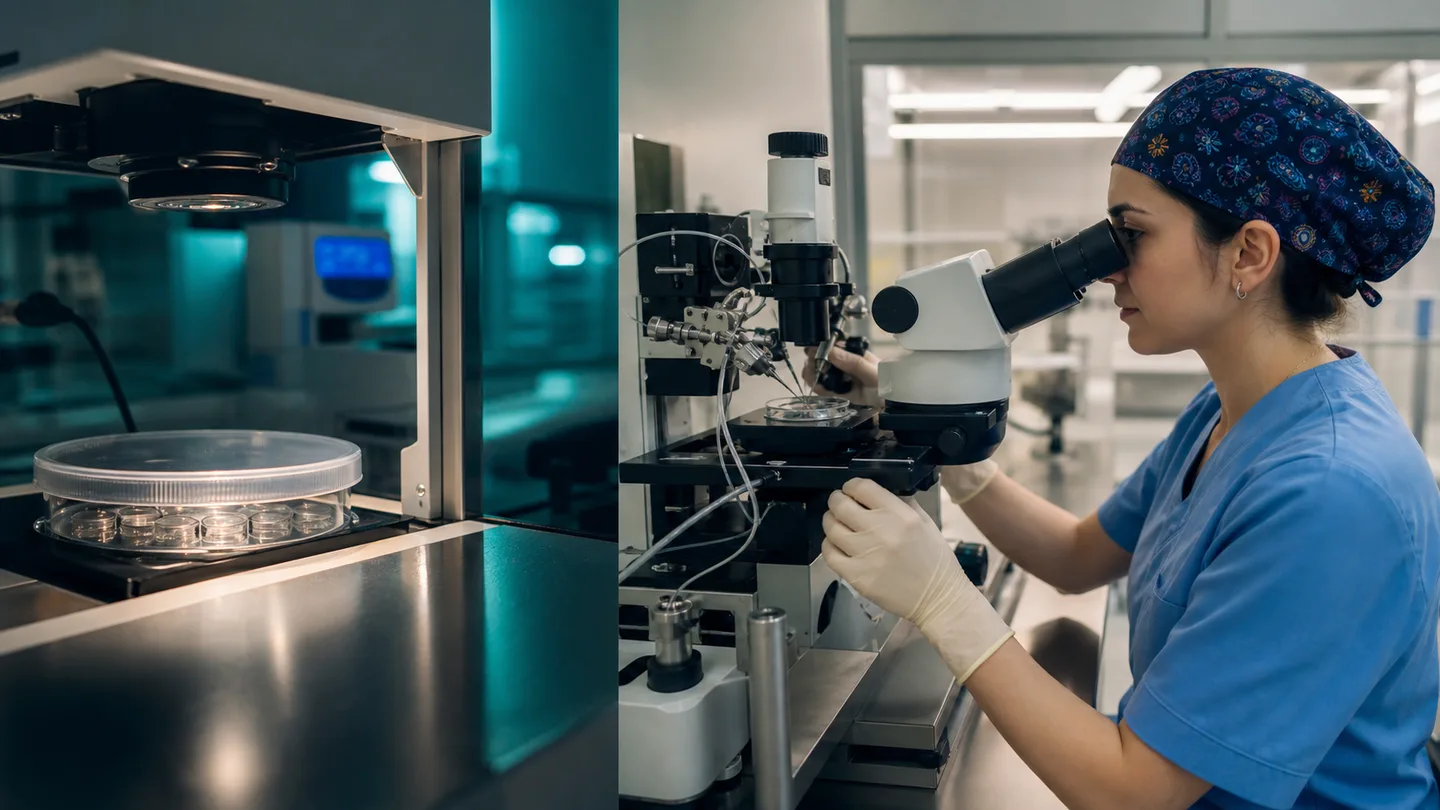
Intracytoplasmic sperm injection (ICSI) is a laboratory technique. In conventional IVF, eggs and sperm are placed together; in ICSI, an embryologist selects one sperm and injects it into a mature egg. ICSI is not a separate ovarian stimulation programme: it is a method used at the fertilisation stage of IVF treatment.
When might it be recommended?
- A very low sperm count or severely reduced sperm movement.
- Other clinically significant abnormalities in semen analysis.
- Sperm obtained through a surgical retrieval procedure.
- Absent or very low fertilisation in a previous conventional IVF cycle.
- The use of frozen eggs or certain other specific laboratory indications.
ICSI is not automatically better for everyone. Without a male-factor problem or another specific indication, it has not been shown to improve outcomes over conventional IVF. Ask what supports the recommendation in your particular case.
Preparation and the treatment process
Ovarian stimulation, monitoring and egg collection follow your IVF plan. Discuss sperm sample collection, any backup sample and possible surgical retrieval in advance. Follow the collection instructions you receive rather than choosing medicines or timing based on someone else's experience.
The laboratory assesses suitable mature eggs, performs microinjection and checks for fertilisation. Developing embryos are monitored before a decision about transfer or freezing. Establish when updates will be available and who will explain what the results mean.
What ICSI can and cannot do
ICSI can help overcome difficulty with sperm entering the egg. It does not repair egg quality or ensure that every egg fertilises or an embryo implants. The number of fertilised eggs is not the same measure as the chance of a live birth.
An egg may be damaged during injection, fail to fertilise or produce an embryo that stops developing. The stimulation and egg-collection risks of IVF still apply. Some severe sperm problems have a genetic cause; your clinician may discuss genetic counselling and testing when indicated.
Does ICSI require extra bed rest?
Microinjection happens in the laboratory and does not itself require a separate recovery routine. Your instructions depend on egg collection, your response to stimulation and the transfer plan. Do not dismiss feeling unwell as simply a normal part of treatment; contact the team for advice.
What should I ask before deciding?
Ask: “What is my specific indication?”, “Could conventional IVF be an alternative?”, “What additional costs are involved?” and “What happens if fertilisation does not occur?” Bring previous laboratory reports to your consultation so that the discussion is based on your own history.
Sources and using this information
Sources checked on 22 October 2026. The linked sources are in English. This page provides general information, not individual medical advice. Confirm treatment suitability, availability, timing and costs with the clinic.