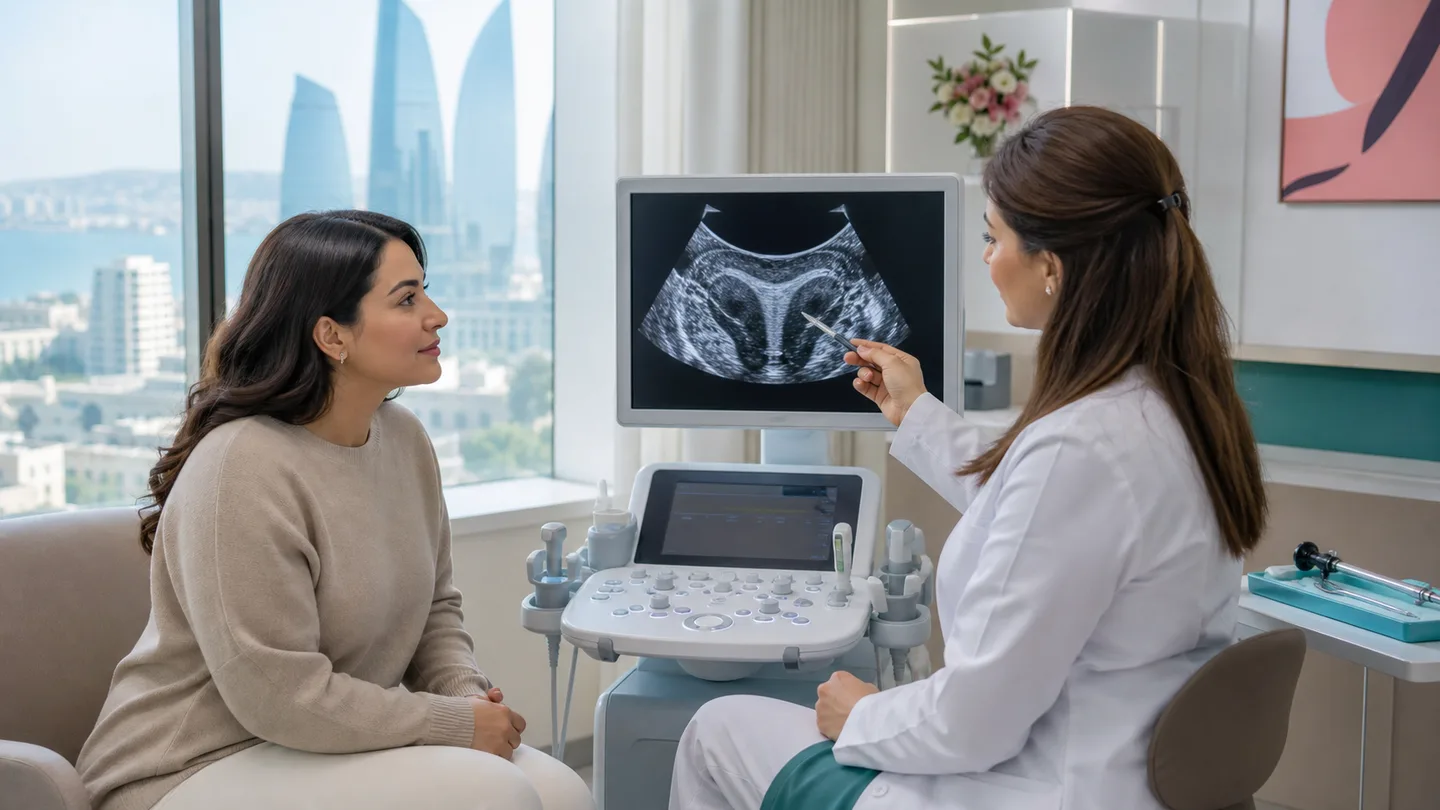
First fertility assessment in Baku: what to expect
Understand how a fertility assessment in Baku begins, what records are useful and why responsible testing is selected for the individual rather than sold as one package.

People arranging a fertility assessment in Baku may expect the first appointment to produce a long list of tests immediately. In good fertility care, the process begins with a detailed conversation. The clinician asks how long pregnancy has been attempted, reviews menstrual patterns, previous pregnancies, health conditions and treatment history, and then identifies which investigations can provide useful answers.
Fertility is a couple-based issue. When a male partner provides sperm, his reproductive history and semen analysis should be considered at the same time as the woman’s assessment. This approach avoids placing responsibility on one person and reduces delays caused by examining the partners one after another.
Which information is useful at the appointment?
Previous ultrasound and laboratory reports, operation summaries, records of pregnancies or losses, and a list of medicines and supplements help the clinician build a consistent picture. If menstrual dates are recorded in a phone or calendar, information from recent months can also be useful.
A male partner can bring previous semen analyses, urology assessments and operation records. An old result does not always replace current testing, but it can reveal how findings have changed over time.
- Previous laboratory, ultrasound and procedure reports.
- A complete list of medicines, vitamins and herbal supplements.
- Notes on cycle dates, prior pregnancies and relevant family history.
History first, targeted assessment second
Questions may cover cycle frequency and duration, pain, pelvic infection, possible endometriosis, operations, long-term conditions, sexual function and lifestyle exposures. Although some questions are personal, each one is intended to narrow possible causes safely and respectfully.
Any physical examination should also be guided by the history. Giving every patient the same extensive package is not evidence-based; beginning with the least invasive investigations that can change management is more responsible.
Which tests might be selected first?
Depending on the clinical picture, the plan may include transvaginal ultrasound, assessment of ovulation, markers of ovarian response such as AMH or antral follicle count, tubal patency testing and semen analysis. Thyroid, prolactin and other hormone tests are selected according to symptoms and cycle pattern.
Results are interpreted with age, history and other findings rather than as isolated numbers. The goal at the end of the first visit is not necessarily an instant diagnosis, but a clear, stepwise and proportionate investigation plan.
Frequently asked questions
Should both partners attend the first visit?
When possible, yes. Gathering both histories at the same time can make the assessment more efficient and prevent a possible male factor from being considered too late.
Should I order every fertility test before attending?
Usually not. Untargeted testing can add cost and create confusing, discordant results. It is more useful to discuss your history first and agree on a purposeful plan.
At Övlad Payı, a fertility assessment in Baku begins with your individual history. Bring any previous results and arrange a consultation to clarify the next steps with the clinical team.
Trusted sources
This article is for patient education and does not replace individual medical advice.