Preparing for a semen sample: a reliable collection guide
Review practical steps for abstinence, complete collection, the correct container, lubricants, transport and unexpected problems before providing a semen sample.

Preparing for a semen sample means following the receiving laboratory’s instructions closely so that the analysis is reliable. The aim is not to manufacture the “best” result, but to provide a complete, safe sample that fairly reflects your usual situation. Reporting what happened during collection is more helpful than hiding a problem.
Clinics may use different practical rules for abstinence, home collection, reception times and transport. Your laboratory’s written instructions therefore take priority over general advice online. Reading them before the appointment can reduce stress and lower the chance that the sample must be repeated for a preventable reason.
What should you plan before collection?
Confirm the abstinence interval requested by the laboratory and record the date of the last ejaculation. An interval that is much shorter or longer can affect volume, count and movement. Tell the clinic about a high fever, significant recent illness or a new medicine, because effects on sperm production may become visible later.
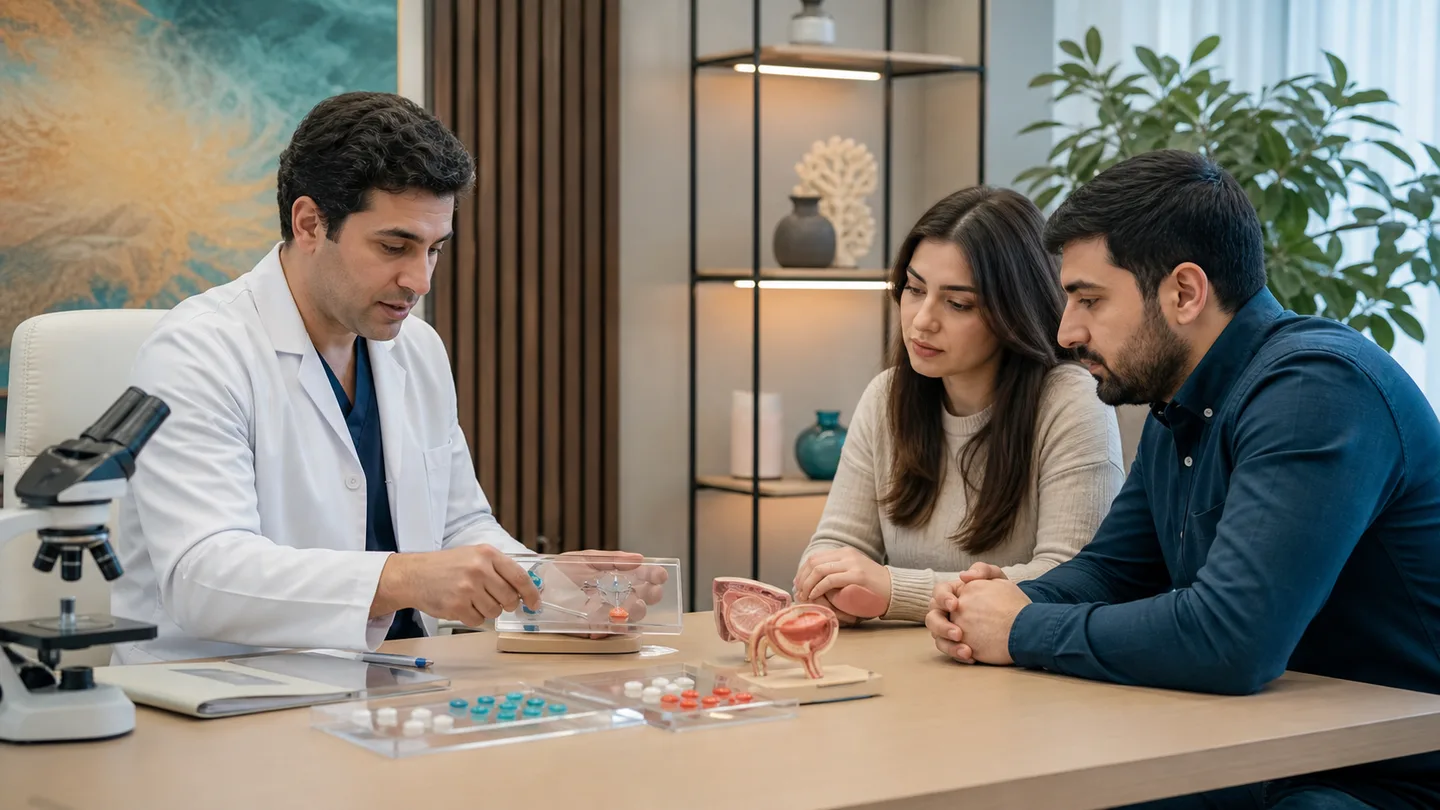
Ask whether the sample must be produced at the clinic or can be collected at home under approved conditions. Identity checks and labeling protect sample safety. If you anticipate anxiety, religious or personal restrictions, erection difficulties or inability to ejaculate, discuss this beforehand so an appropriate alternative can be planned.
- Follow the laboratory’s requested abstinence interval.
- Report fever, illness, medicines and hormone use.
- Know the collection location, appointment time and handover procedure.
How is a complete sample collected safely?
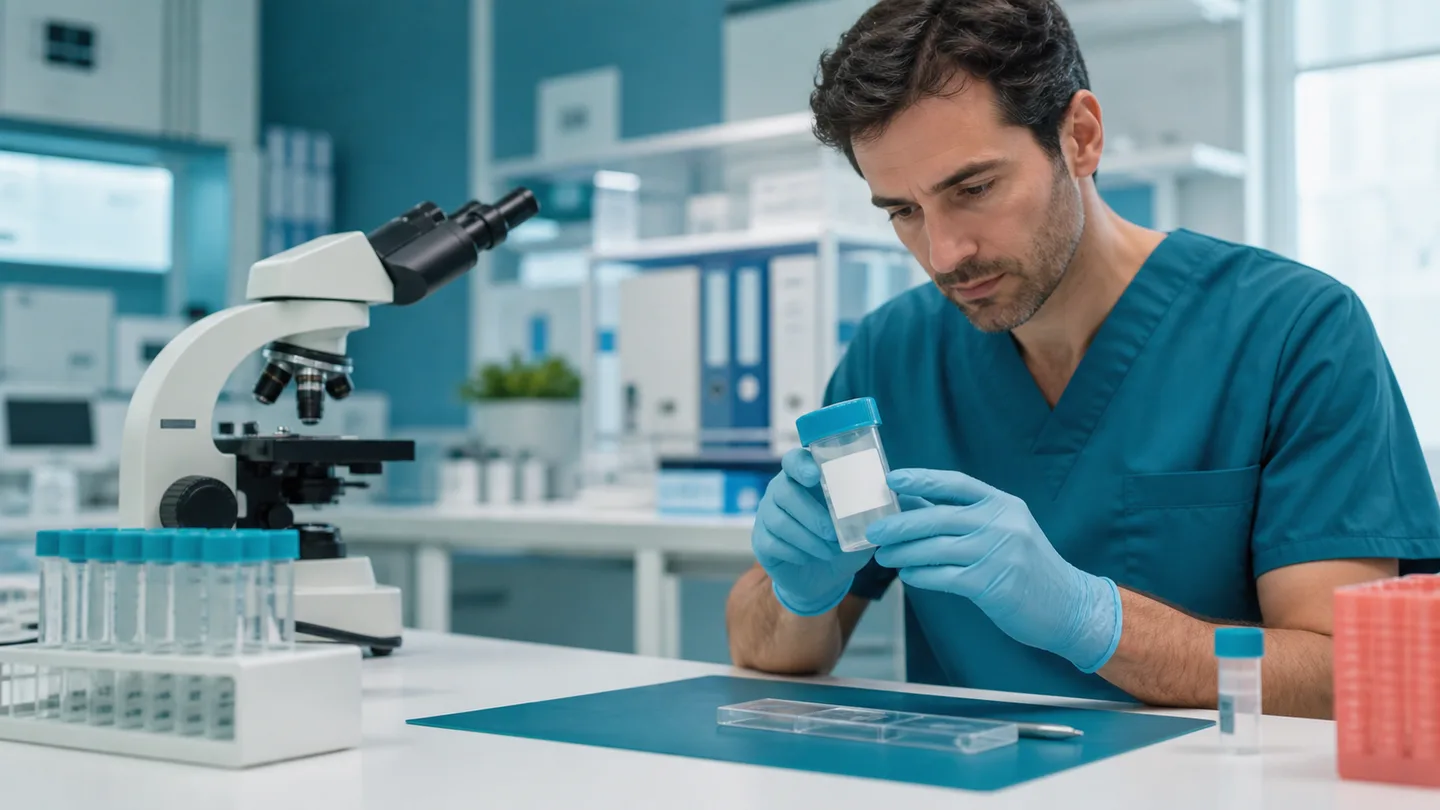
Wash and dry your hands and genital area according to the laboratory’s instructions. Use only the supplied sterile container and avoid touching its inside. Ordinary lubricant, saliva and standard condoms can affect sperm movement; use only a laboratory-approved product or special collection device.
Collecting the entire ejaculate is important, especially the first fraction, which may contain a high concentration of sperm. If part is lost, do not submit it without explanation. Tell staff which part and approximately how much may have been missed so they can decide whether analysis remains useful or a repeat is preferable.
How should a home sample be delivered?
Home collection should be used only when the clinic permits it. Close the container securely, record the exact collection time and bring it directly within the laboratory’s stated window without extreme temperature change. Do not leave the sample in a car, refrigerator or direct sunlight.
Report delay, opening, spillage or a temperature problem. Hiding it through embarrassment can lead to misleading interpretation. Difficulty producing a sample is also not unusual; the team may discuss another day, an approved sperm-safe collection condom or another method appropriate to the medical reason.
- Close the container immediately and record the time.
- Follow the laboratory’s exact transport and temperature instructions.
- Always report delay, loss or collection difficulty.
Frequently asked questions
Can I use an ordinary lubricant?
Usually not. Many lubricants can affect sperm movement. Use only a sperm-compatible product or collection device specifically approved by the receiving laboratory in advance.
What if part of the sample was lost?
Tell the laboratory immediately and honestly, especially if the first fraction was lost. Staff will decide whether the sample can still be interpreted or should be repeated.
Övlad Payı provides specific laboratory instructions for preparing for a semen sample. Raise questions before the test day so collection can be calm, safe and reliable.
Trusted sources
This article is for patient education and does not replace individual medical advice.