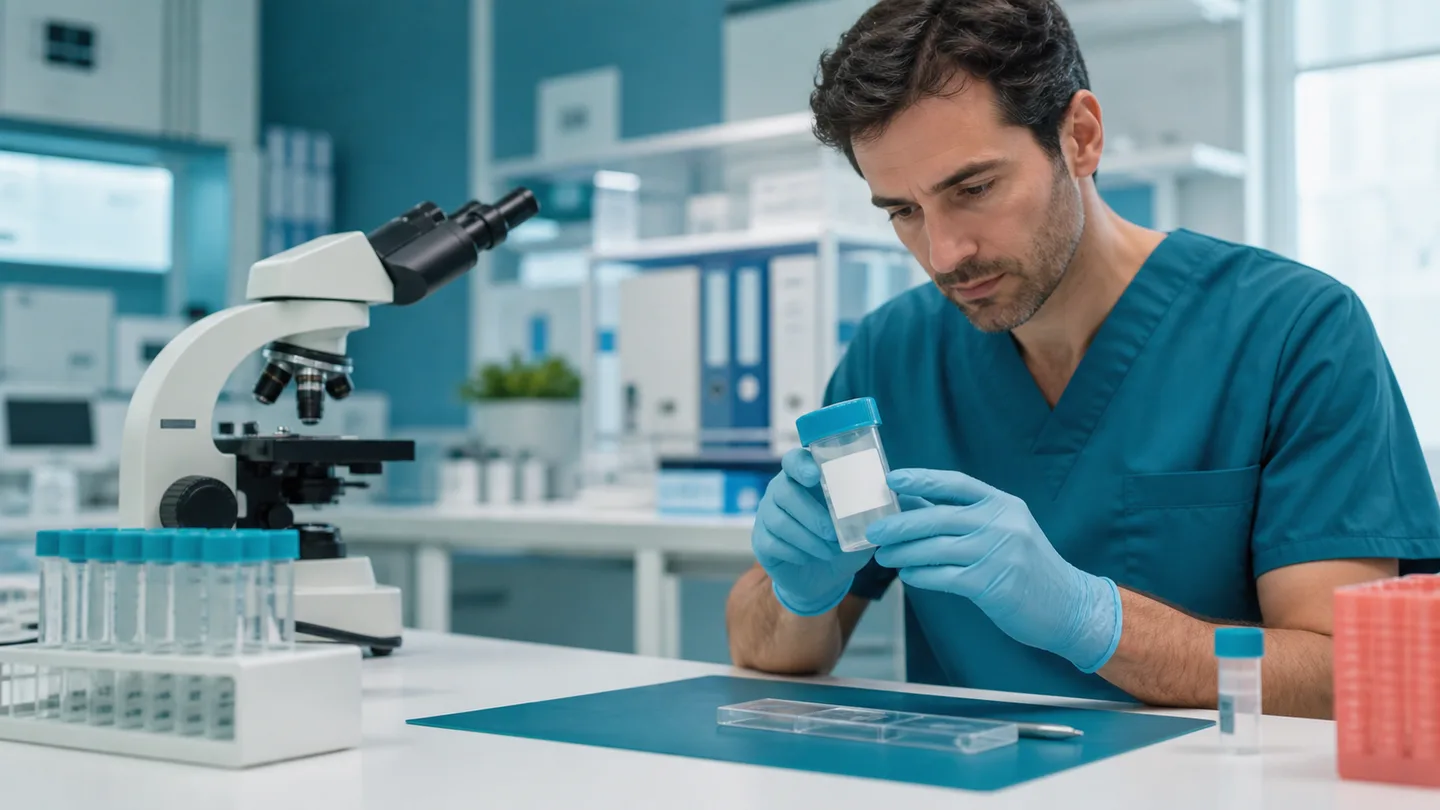
Male fertility hormones and the physical examination
Learn when FSH, testosterone, LH and prolactin are useful, what a physical examination can clarify and why testing should remain targeted.

Male fertility hormones form part of the signalling system between the hypothalamus and pituitary in the brain and the testes. FSH supports cells involved in sperm production, while LH is linked with testicular testosterone production. A hormone panel does not replace semen analysis, and not every hormone needs testing in every man.
The physical examination looks for clues that may explain laboratory findings. Testicular size and consistency, a palpable varicocele, the presence of sperm-carrying ducts and secondary sexual characteristics can be assessed. The examination should be private, explained and performed with consent; it is reasonable to voice any concern beforehand.
When are FSH and testosterone requested?
AUA/ASRM guidance includes FSH and total testosterone in targeted assessment for oligozoospermia or azoospermia, small testes, impaired libido, erectile dysfunction or signs of hormonal abnormality. A broad panel is not routinely needed by every man with a normal semen analysis and no hormonal symptoms.
Higher FSH can fit with reduced testicular response in sperm production, but it cannot perfectly predict whether sperm retrieval will succeed. Low testosterone needs confirmation with appropriately timed morning measurement and clinical features. Comparing one result with an online “optimal” number is not a diagnosis.
- Oligozoospermia or azoospermia.
- Reduced libido, erectile change or other hormonal features.
- Small testes or examination suggesting impaired sperm production.
What do LH, prolactin and other hormones add?
If testosterone is low, LH helps distinguish a testicular problem from reduced signalling higher in the pathway. Prolactin may be selected when LH is low or low-normal and libido or other features are present. Markedly raised prolactin needs separate evaluation for medicine, pituitary and other causes.
Thyroid and other endocrine tests are added when symptoms, history or clinical findings justify them. A broad “fertility hormone package” can produce incidental borderline values without helping a real decision. Each test should answer a defined question before blood is taken.
How do examination and further tests fit together?
A specialist assesses testicular size, epididymides, presence of the vas deferens, varicocele and, when relevant, penile anatomy. This helps distinguish obstruction from impaired production and decide whether imaging or genetic tests would add meaningful information.
In azoospermia or severe oligozoospermia, particularly with raised FSH or testicular atrophy, karyotype and Y-chromosome microdeletion testing may be recommended. Congenital absence of the vas deferens can prompt CFTR assessment. Genetic counseling matters because a result can affect both treatment and potential offspring.
- Scrotal or transrectal imaging according to the examination.
- Targeted genetic testing in severe sperm-production disorders.
- Genetic counseling to explain treatment and family implications.
Frequently asked questions
Does normal testosterone mean a normal sperm count?
No. Sperm production can be impaired despite normal testosterone. Semen analysis and clinical assessment provide different information; one cannot substitute for the other.
Should I take testosterone if my level is low?
External testosterone can suppress sperm production when fertility is desired. Confirm the cause and plan a fertility-preserving option with a reproductive urology or endocrine specialist.
At Övlad Payı, male fertility hormones are selected to answer questions raised by symptoms and semen analysis, not as a blanket package. Review results with a specialist for cause and safe treatment options.
Trusted sources
This article is for patient education and does not replace individual medical advice.