PCOS fertility assessment: diagnosis and next steps
Learn why a PCOS fertility assessment is not based on one ultrasound or AMH value, and how ovulation, androgen features and metabolic health are reviewed.

A PCOS fertility assessment involves more than finding many follicles on an ultrasound. Polycystic ovary syndrome can appear through irregular ovulation, higher androgen activity or signs, and characteristic ovarian morphology. Not every person has every feature, and symptoms can change over time.
PCOS is a common cause of anovulation, but the diagnosis does not mean pregnancy is impossible. Assessment aims to understand why cycles are irregular, exclude other causes, review overall health and build a stepwise plan suited to the person’s pregnancy goals.
Which information supports diagnosis?
The clinician asks about menstrual frequency, androgen-related features such as excess hair or acne, weight change, medicines and family history. Pregnancy testing and targeted evaluation for thyroid, prolactin or other explanations may be selected from the clinical picture.
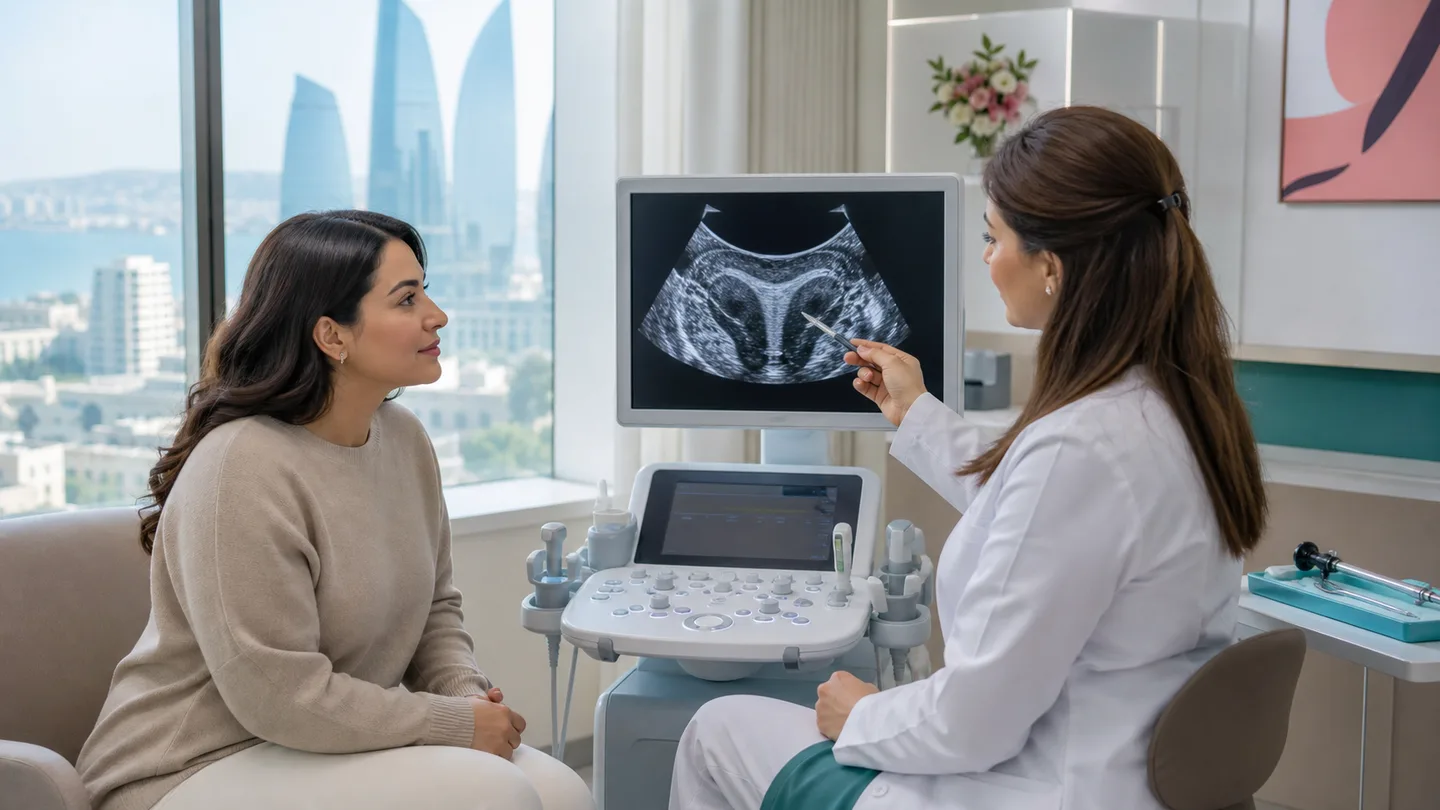
Ultrasound assesses ovarian morphology and the uterus, but a “polycystic appearance” alone does not establish PCOS. AMH may provide additional information in some diagnostic systems, yet it is not a standalone PCOS or fertility verdict.
- Cycle and ovulation history are central.
- Androgen features and purposeful laboratory results are considered together.
- An ultrasound finding is not interpreted outside clinical context.
Why is metabolic health discussed?
PCOS is associated with a greater likelihood of insulin resistance, type 2 diabetes and some cardiovascular risks. Blood pressure, glucose and lipids may be assessed according to individual risk. This is intended to support health before pregnancy, not to blame the patient.
Lifestyle support can be useful, particularly with ovulatory dysfunction, but reaching a “perfect weight” should not be a universal barrier to care. Age, symptoms and the effect of delaying treatment must also be considered.
Which fertility options may be considered?
Care depends on pregnancy goals, ovulation, age, semen findings and tubal status. Ovulation induction may be an appropriate first step for some patients; IUI or IVF may be discussed when other factors, a longer duration or previous treatment results are relevant.
People with PCOS can have a strong response to ovarian stimulation. The team individualizes medicine dose and monitoring to reduce the risks of excessive follicle development and ovarian hyperstimulation. No approach guarantees an outcome.
Frequently asked questions
Does a polycystic appearance on ultrasound always mean PCOS?
No. Diagnosis also considers cycle pattern, androgen features and laboratory information. Some people have this ovarian appearance without having the syndrome.
Does PCOS mean that IVF is always required?
No. Some patients conceive with ovulation induction. The decision about IVF depends on age, duration, tubes, sperm, previous care and informed preferences.
For a PCOS fertility assessment based on the complete clinical picture rather than one test, arrange an individualized review with the Övlad Payı team.
Trusted sources
This article is for patient education and does not replace individual medical advice.